Best Pressure Sensor Manufacturer & Supplier
Pressure sensors are among the most widely used and versatile sensing devices in modern technology. From ensuring the safety of automobile tires to monitoring patient health in hospitals, pressure sensors provide critical data that drives decision-making across countless applications. In the United States, pressure sensors have become a vital component in industries such as automotive, aerospace, healthcare, oil and gas, manufacturing, and smart infrastructure.
- High accuracy and repeatability
- Wide pressure range
- Robust and corrosion-resistant materials
- Compact and lightweight design
- Analog and digital output options
- Overpressure protection
- Long-term stability and low drift
- Easy integration with control systems


Pressure Sensors - Factory Wholesale Available Worldwide
Zhengzhou Winsen Electronics Technology Co., Ltd., a Chinese stock market listed company since 2009, is a professional manufacturer with 30+ years of experience in gas sensing technology. We provide the most complete sensing solutions with 7 categories and 200+ series, covering gas sensors, pressure, flow, humidity sensors, and related instruments. Our products are widely applied in household, automotive, medical, industrial safety, fire prevention, smart city, and environmental monitoring, trusted by global partners for reliability, innovation, and quality.
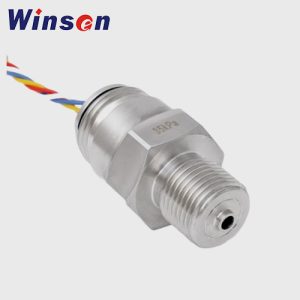
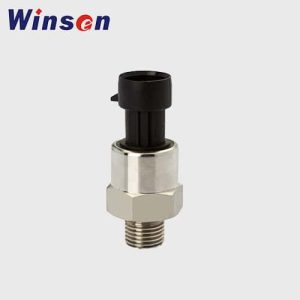
Diffused Silicon Pressure Sensor
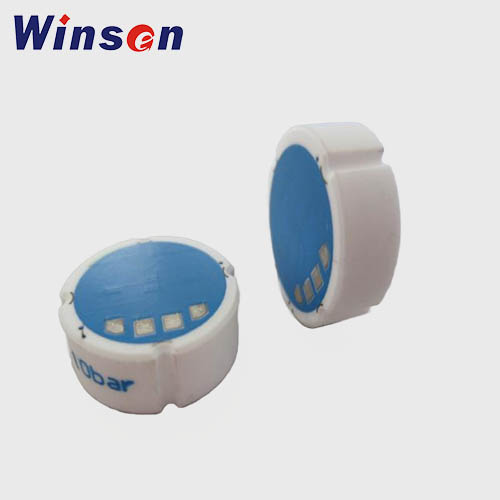
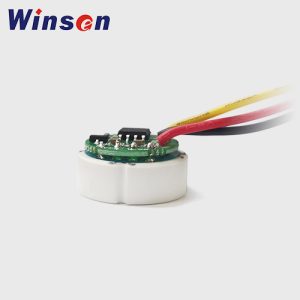
Ceramic Pressure Sensor
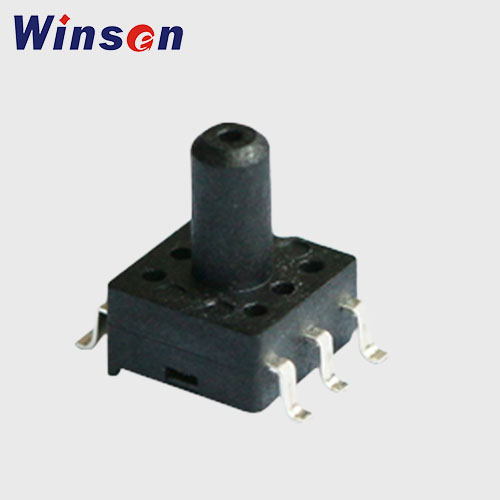
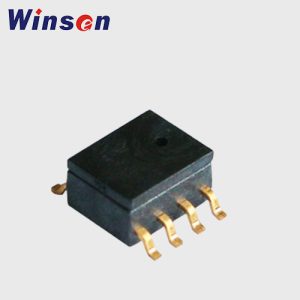
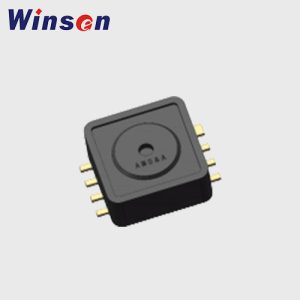
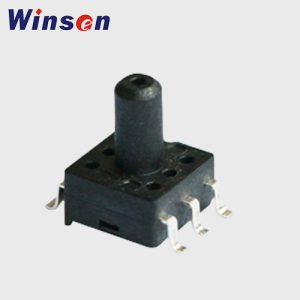
Plastic Sealed Pressure Sensor
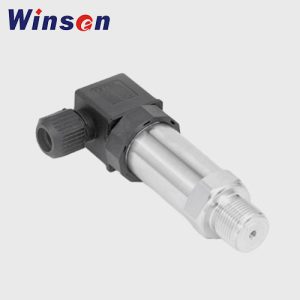
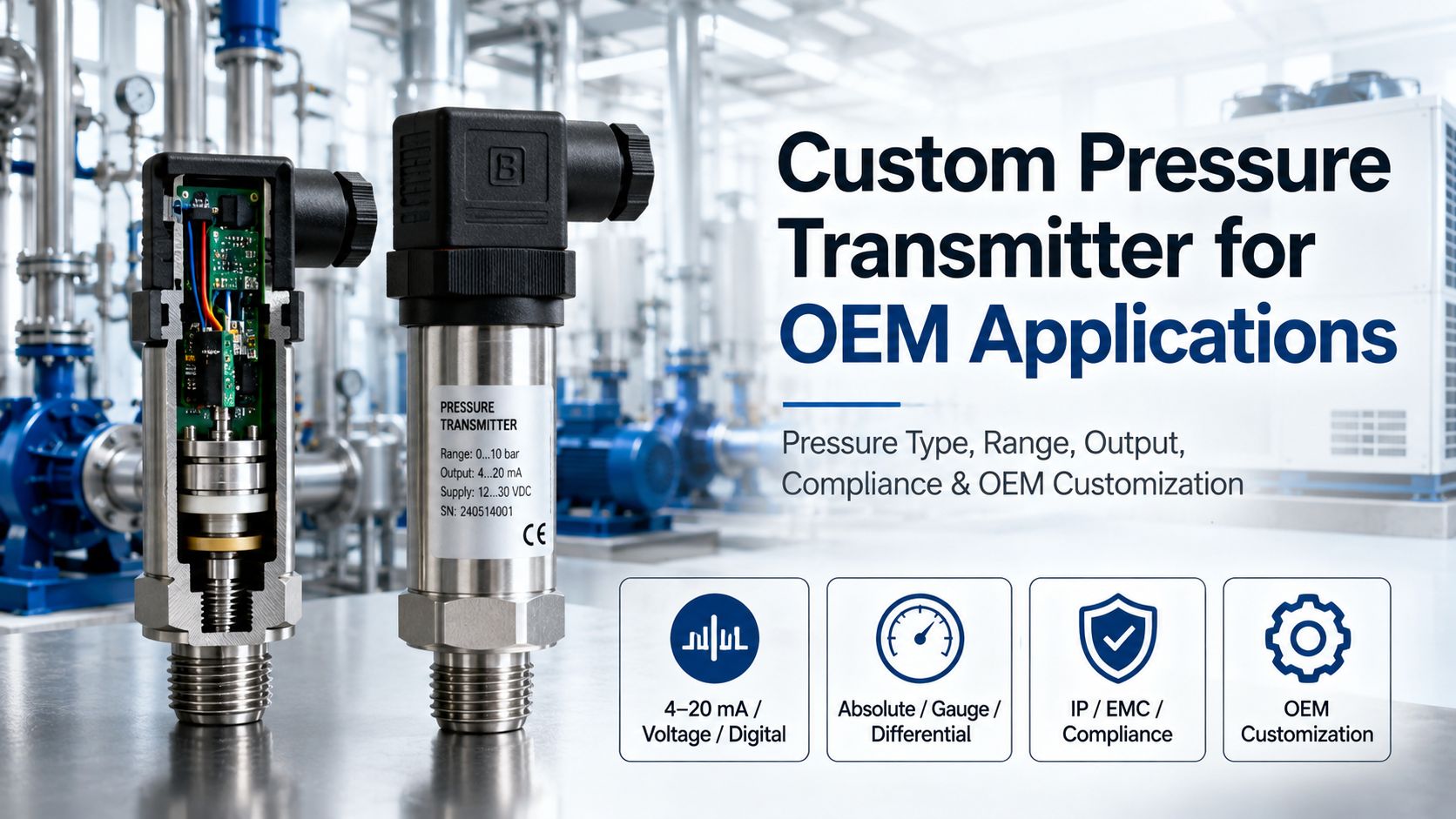
Diffused Silicon Pressure Transmitter
Ceramic Pressure Transmitter
Glass Micro-Fusing Pressure Transmitter
Pressure Sensor and Transmitter Comparison Overview
| Category | Model | Power Supply / Output | Detection Range | Accuracy / Nonlinearity | Pressure Reference | Operating Temperature | Shell Material | Remarks |
| Diffused Silicon Pressure Sensor | WPAK70 | 1.5mA / mV | -100kPa ~ 0 ~ 10kPa…10MPa | ≤±0.3%FS | Gauge / Absolute / Sealed Gauge | -40℃ ~ 120℃ | – | High versatility, compact design |
| WPAK69 | 1.5mA / mV | -100kPa ~ 0 ~ 10kPa…10MPa | ≤±0.3%FS | Gauge / Absolute / Sealed Gauge | -40℃ ~ 120℃ | – | Similar to WPAK70 | |
| WPAK68 | 1.5mA / mV | -100kPa ~ 0 ~ 10kPa…100MPa | ≤±0.3%FS | Gauge / Absolute / Sealed Gauge | -40℃ ~ 120℃ | – | Extended range version | |
| WPAK67 | 1.5mA / mV | 0 ~ 10kPa…2.5MPa | ≤±0.3%FS | Differential Pressure | -40℃ ~ 120℃ | – | For differential applications | |
| WPAK66 | 1.5mA or 10V / mV | 6MPa…60MPa | ≤±0.3%FS | Sealed Gauge | -40℃ ~ 120℃ | – | Sealed design for higher ranges | |
| WPAK65 | 1.5mA or 10V / mV | -100kPa ~ 0 ~ 10kPa…16MPa | ≤±0.3%FS | Gauge / Absolute / Sealed Gauge | -40℃ ~ 120℃ | – | General-purpose sensor | |
| WPAK64 | 1.5mA or 10V / mV | -100kPa ~ 0 ~ 10kPa…25MPa | ≤±0.3%FS | Gauge / Absolute / Sealed Gauge | -40℃ ~ 120℃ | – | Moderate range coverage | |
| WPAK63J | 1.5mA / mV | -100kPa ~ 0 ~ 10kPa…100MPa | ≤±0.3%FS | Gauge / Absolute / Sealed Gauge | -40℃ ~ 120℃ | – | J-type version for special mounting | |
| WPAK63 | 1.5mA or 10V / mV | -100kPa ~ 0 ~ 10kPa…100MPa | ≤±0.3%FS | Gauge / Absolute / Sealed Gauge | -40℃ ~ 120℃ | – | Versatile with wide range | |
| Ceramic Pressure Sensor | WPAH01 | 2–20V / mV | 0 ~ 200kPa…40MPa | ≤±0.3%FS | – | -40℃ ~ 125℃ | – | High chemical resistance |
| Plastic Sealed Pressure Sensor | WPAS12 | Digital and analog | 15–115kPa | – | – | -40℃ ~ 125℃ | – | Cost-effective, compact |
| WPAS02 | Digital and analog | 10kPa ~ 100kPa | – | – | -20℃ ~ 80℃ | – | Basic sensor for air/gas | |
| WPAS01 | Digital and analog | 10kPa ~ 100kPa | – | – | -40℃ ~ 125℃ | – | Robust high-temp tolerance | |
| Diffused Silicon Pressure Transmitter | WPCK81 | 4–20mA, RS485 | 0 ~ 1m…200mH₂O | ±0.5%FS / ±1%FS | Gauge Pressure | – | Stainless steel | For deep-level and tank level measurements |
| WPCK62 | 4–20mA (Optional) | 0 ~ 35kPa…25MPa | ±0.5%FS | Gauge / Absolute / Sealed Gauge | – | Stainless steel | Widely compatible, thread options | |
| WPCK08 | 4–20mA, RS485 | 0 ~ 200mH₂O | ±0.5%FS | Gauge Pressure | – | Stainless steel | Explosion-proof version | |
| WPCK07 | 4–20mA, 0.5–4.5V, 0–5V, 1–5V, 0–10V, 1–10V | -100kPa ~ 0 ~ 10kPa…100MPa | ±0.5%FS | Gauge / Absolute / Sealed Gauge | – | Stainless steel | Full-range output types | |
| WPCK05 | 0.5–4.5V, 0–5V, 1–5V, 0–10V, 1–10V | -100kPa ~ 0 ~ 10kPa…100MPa | ±0.5%FS | Gauge / Absolute / Sealed Gauge | – | Stainless steel | Voltage output options | |
| WPCK03 | I²C, 4–20mA, 0.5–4.5V and more | -100kPa ~ 0 ~ 10kPa…100MPa | ±0.2%FS, ±0.5%FS (custom) | Gauge / Absolute / Sealed Gauge | – | Stainless steel | Flexible signal types, high accuracy | |
| Ceramic Pressure Transmitter | WPCH04 | 0.5–4.5V (Customizable) | 0.2MPa…40MPa | 0.1%FS (Default) | – | – | Stainless steel | High precision ceramic core |
| WPCH01 | 4–20mA, 0/1–5/10V, 0.5–4.5V | 0.2–5MPa | 0.1% ~ 5.0%FS (Default 2.0%) | – | – | Stainless steel | Customizable, versatile outputs | |
| WPBH01 | Proportional voltage (0.5–4.5V) | 2–400 bar (Customizable) | 0.5%, 1%, 2% (Default), 3% | – | – | Stainless steel | Broad pressure range | |
| Glass Micro-Fusing Transmitter | WPCK89 | Digital and analog | 0 ~ 100 / 150 / 250 / 500 psig | ±1%FS | – | – | Stainless steel | Extremely robust and thermally stable |
Key Applications of Pressure Sensors in the USA
Industrial & Manufacturing
Automation and process control in chemical plants, refineries, and semiconductor fabs.
Robotics applications for precision handling.
Industry 4.0 integration with smart sensors and IIoT platforms.
Automotive Industry
The U.S. automotive sector has been one of the strongest adopters of pressure sensor technology.
Tire Pressure Monitoring Systems (TPMS): Mandatory since 2007 in all passenger cars and light trucks, improving road safety.
Fuel Injection & Emission Control: Sensors ensure efficient fuel combustion and compliance with EPA emission standards.
Electric Vehicles (EVs) & Hydrogen Fuel Cells: Pressure sensors are critical for battery management, cooling systems, and hydrogen tank monitoring.
Medical & Healthcare
Blood Pressure Monitoring Devices: Essential for personal health and hospital use.
Ventilators & Respirators: Critical during COVID-19 for patient care.
Infusion Pumps & Dialysis Machines: Depend on precise fluid pressure monitoring.
Environmental & Smart Infrastructure
Water Treatment Plants: Monitor filtration and pump systems.
HVAC Systems: Optimize energy efficiency in buildings.
Smart Cities: Sensors integrated into infrastructure for monitoring water, air, and energy usage.
Oil, Gas & Energy
Pipeline pressure monitoring prevents leaks and ensures safety.
Offshore drilling operations require robust, corrosion-resistant sensors.
Renewable energy systems use pressure sensors in wind turbines, hydro plants, and solar thermal systems.
Aerospace & Defense
Cabin pressure monitoring ensures passenger safety.
Hydraulic systems rely on sensors for stability and control.
NASA and private space companies use advanced sensors in spacecraft and satellites.
Why Global Clients Choose Us?
The company consistently adheres to the quality policy of “Fine Craftsmanship, Scientific Innovation, Pursuit of Excellence, and Value-Added Service.” By formulating production process control plans and work instructions, it has established a standardized, accountable, and regulated process management system. Additionally, the company has independently developed an MES production management system, enabling comprehensive and visual management across the entire workflow.

30+ YEARS OF EXPERIENCE
R&D, manufacture and sales of sensors and sensing solutions.
QUALITY GUARANTEE CONTINOUS IMPROVEMENT
Complete and rigid process flow control, coupled with significant improvements.


INTERNATIONAL MARKET
Deliver sensing products to more than 100 countries and regions.
STABLE SUPPLY CHAIN RELIABLE PRODUCTION
Core components not subject to constraints, advanced equipments for manufaturing and test.


R&D STRENGTH TECHNOLOGY INNOVATION
200+ patents, 180+ R&D team members, self-built labs for continous innovation.
ONE-STOP SERVICE
Professional consultation, fast delivery, 24 hours after-sales support.

Leading the Industry, Innovative & Controllable Technology
With robust R&D capabilities, we maintain sustained input in R&D and unwavering commitment to technological innovation. This not only ensures that we remain at the forefront of industry but also drives continuous innovation, leading the future trend of the sensing industry.
10% R&D Input
The average annual R&D input exceeds 10% of the annual revenue.
5+ R&D Layout
With Zhengzhou headquarters as the core, a nationwide R&D and innovation system is being established, encompassing cities of Shanghai, Wuhan, Shenzhen, and Taiyuan.
180+ R&D Team
There are over 180 R&D personnel, including more than 10 with doctoral degrees and over 50 with master's degrees, who have an average of more than 8 years of experience in sensor development.
20+ Experiment Types
Gas-related, Climatic Environment, EMC, Electrical Performance, Mechanical Performance, etc.
10+ Advanced Laboratories
CNAS Laboratory, MEMS Laboratory, UL Laboratory, Nanocomposite Materials Laboratory, etc.
400+ sets Leading R&D Equipment
Cube Storage, Die Bonder, Lithography Machine, Coating Machine, SMT Placement Machine, Automatic Probe Station, etc.
What is a Pressure Sensor?
A pressure sensor is a device that measures the force exerted by a fluid (liquid or gas) per unit area and converts this measurement into an electrical signal that can be read and analyzed. These sensors are essential in both everyday products and complex industrial systems.
Types of Pressure Measurements
Absolute Pressure – measured relative to a perfect vacuum.
Gauge Pressure – measured relative to atmospheric pressure.
Differential Pressure – the difference between two separate pressure points.
Core Sensing Technologies
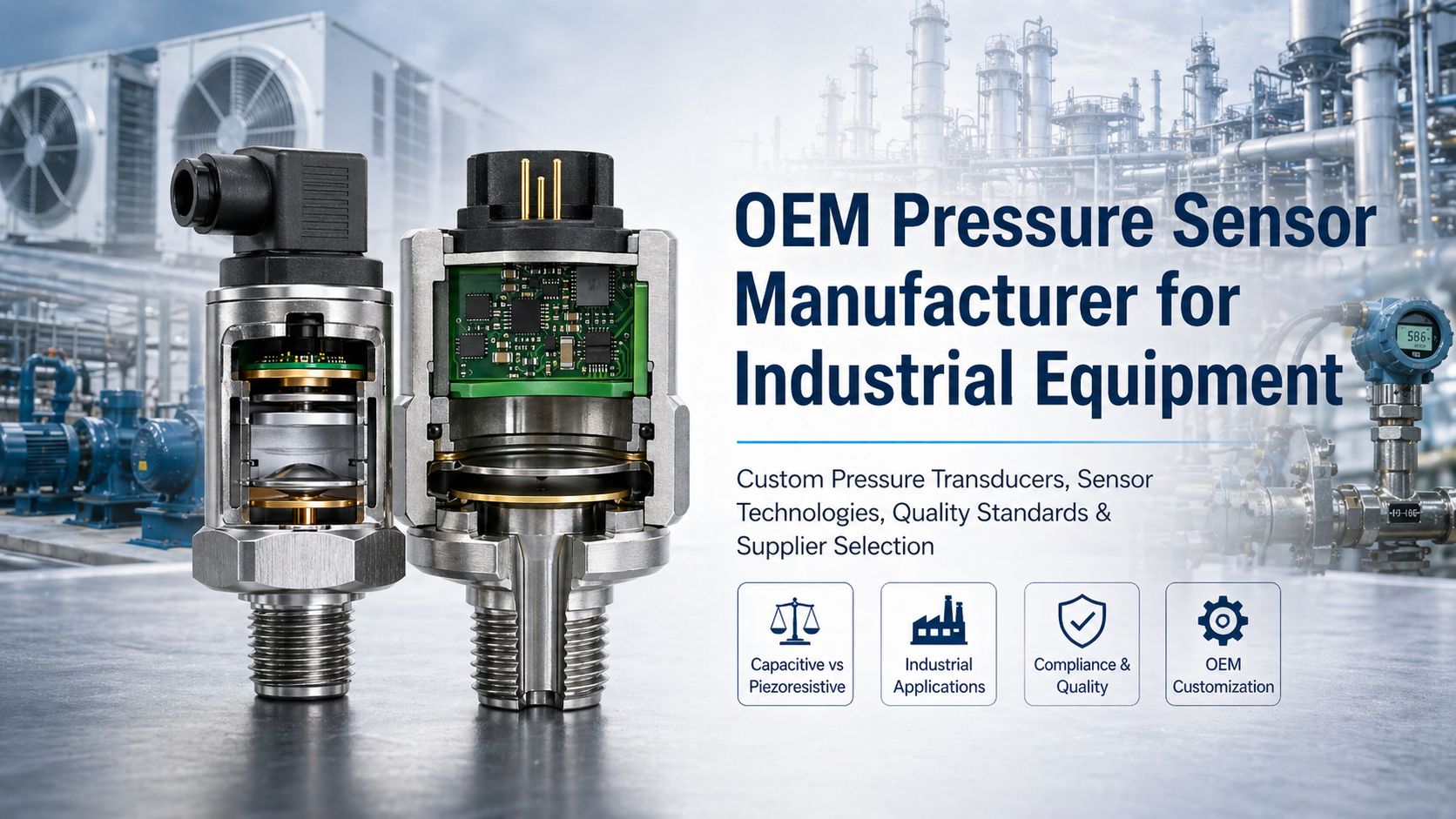
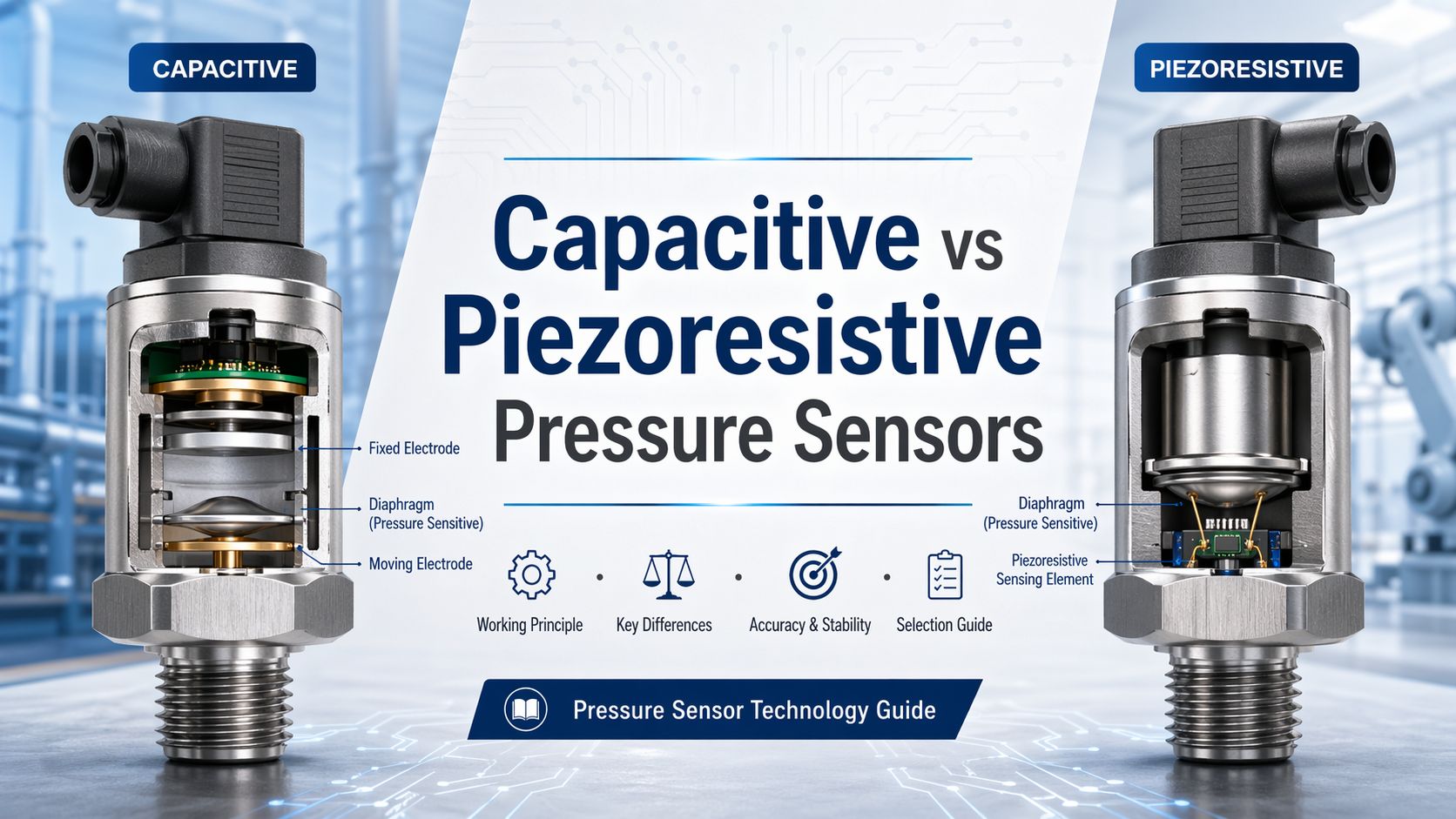
Piezoresistive Sensors – based on resistance change in semiconductor material under pressure.
Capacitive Sensors – measure pressure via capacitance variation.
Strain Gauge Sensors – rely on resistance changes in a strain element.
MEMS (Micro-Electro-Mechanical Systems) Sensors – miniature, highly integrated silicon-based sensors.
Ceramic Pressure Sensors – robust sensors with high chemical resistance.
Optical/Resonant Sensors – advanced solutions for niche high-precision applications.
Pressure Sensor Market in the USA
The United States is one of the largest markets for pressure sensors, driven by a wide range of applications and strict government regulations.
Market Size: The U.S. pressure sensor market is valued in the billions of dollars and is projected to grow steadily due to demand in automotive electronics, medical devices, and industrial automation.
Key Drivers:
Mandatory safety regulations (e.g., TPMS in vehicles).
Rapid adoption of IoT-enabled smart devices.
Growth of electric vehicles and hydrogen fuel technologies.
Increasing demand for patient monitoring systems in healthcare.
Frequently Asked Questions (FAQs) about Pressure Sensors
1. What is a pressure sensor?
A pressure sensor is a device that detects and converts physical pressure into an electrical signal. It is used to monitor and control pressure in gases or liquids, commonly applied in industrial, automotive, HVAC, and medical systems.
2. What are the main types of pressure sensors?
The most common types include:
Diffused Silicon Pressure Sensors
Ceramic Pressure Sensors
Plastic Sealed Pressure Sensors
Pressure Transmitters (Diffused Silicon, Ceramic, Glass Micro-Fusing)
Each type has its specific advantages in terms of durability, accuracy, and application environment.
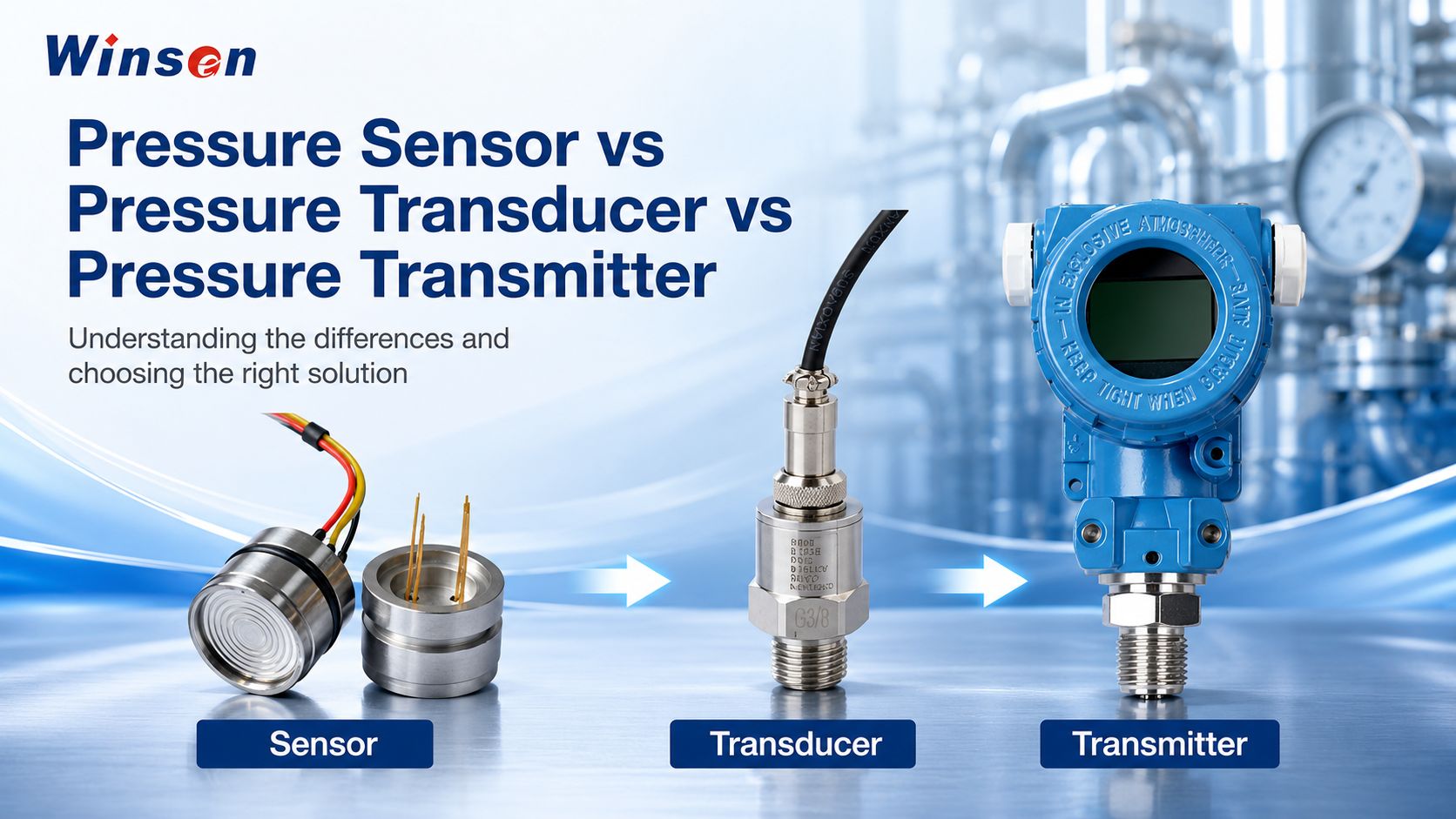
3. What is the difference between a pressure sensor and a pressure transmitter?
A pressure sensor typically outputs a raw signal (e.g., mV), while a pressure transmitter amplifies and conditions the signal, often outputting a standard format like 4–20mA or 0–10V. Transmitters are better suited for long-distance signal transmission and industrial environments.
4. What is meant by gauge, absolute, and differential pressure?
Gauge pressure is measured relative to atmospheric pressure.
Absolute pressure is measured relative to a perfect vacuum.
Differential pressure measures the difference between two separate pressures.
5. What is the typical accuracy of a pressure sensor?
Accuracy varies by model and application. Most industrial pressure sensors offer accuracy from ±0.1%FS to ±1%FS. High-precision versions may go below ±0.1%FS.
6. How do I choose the right pressure sensor for my application?
Key factors to consider include:
Required pressure range
Type of pressure (gauge, absolute, differential)
Output signal (analog, digital, 4–20mA, etc.)
Accuracy requirements
Environmental conditions (temperature, humidity, media compatibility)
7. Can pressure sensors work with corrosive or high-temperature media?
Yes, but you must select the right sensor material. Ceramic and stainless steel sensors often handle corrosive fluids well. For high temperatures, sensors with extended operating temperature ranges (up to 125°C or higher) are preferred.
8. What is the typical output of a pressure sensor?
It can be:
Analog: mV, 0.5–4.5V, 0–5V, 0–10V, etc.
Current loop: 4–20mA
Digital: I²C, RS485, SPI
Transmitters usually provide conditioned and standardized outputs.
9. How do I install a pressure sensor?
Most sensors have threaded process connections (e.g., G1/4″, NPT). Ensure proper sealing (using PTFE tape or gaskets), avoid over-torquing, and mount them according to manufacturer instructions to avoid signal drift or mechanical damage.
10. What are typical applications of pressure sensors?
Pressure sensors are widely used in:
Industrial automation
Water level and pump control
HVAC systems
Automotive systems (e.g., engine, brake, and fuel monitoring)
Medical devices
Refrigeration and air conditioning systems