Pressure is a fundamental physical quantity representing the force exerted by a fluid (liquid or gas) per unit area. Understanding and accurately measuring pressure is critical across science, engineering, medicine, and industry. One of the most common forms of pressure measurement is gauge pressure.
Gauge pressure is the pressure measured relative to the local atmospheric pressure. Unlike absolute pressure, it does not account for the atmospheric component. This article explores the concept of gauge pressure in detail, comparing it with other types of pressure, explaining how it’s measured, and highlighting its importance in real-world applications.
2. What is Gauge Pressure?
Gauge pressure (Pg) is the pressure measured relative to the ambient atmospheric pressure. It is the most commonly used pressure reference in everyday life and industrial contexts because it reflects how much pressure is in excess (or below) atmospheric pressure.
2.1 Mathematical Expression
Gauge pressure is defined by the formula:
Pgauge=Pabsolute−Patmospheric
Where:
Pgauge = Gauge Pressure
Pabsolute = Absolute Pressure
Patmospheric = Atmospheric Pressure (usually ~101.325 kPa at sea level)
Gauge pressure is expressed in the same units as absolute pressure, with the distinction that it excludes atmospheric pressure:
Pascals (Pa) and kilopascals (kPa)
Pounds per square inch gauge (psig)
Bar (gauge) or mbar
Kilogram-force per square centimeter (kgf/cm²)
Example: A car tire might be inflated to 35 psig, which means it’s 35 psi above atmospheric pressure.
4. Gauge Pressure vs. Absolute and Differential Pressure
Understanding the differences between pressure types is essential for selecting the right sensor and interpreting measurements correctly.
Type
Reference Point
Typical Use Cases
Gauge Pressure
Ambient Atmosphere
Tire pressure, water supply, industrial machines
Absolute Pressure
Perfect Vacuum
Scientific applications, altitude measurement
Differential Pressure
Another Pressure Point
Flow, filter clogging, HVAC systems
For example, if atmospheric pressure is 101.325 kPa and a tank reads 150 kPa absolute pressure, its gauge pressure is:
Pgauge=150−101.325=48.675kPa
5. How Gauge Pressure is Measured
5.1 Gauge Pressure Sensors
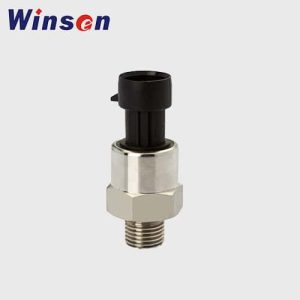
Gauge pressure sensors typically use a vented diaphragm. One side of the diaphragm is exposed to the media (fluid/gas), while the other side is open to atmospheric pressure, allowing the sensor to ignore atmospheric pressure and only measure the differential.
5.2 Sensor Technologies
Common types of gauge pressure sensors include:
Piezoresistive Sensors: Change in electrical resistance with diaphragm deformation.
Capacitive Sensors: Change in capacitance between diaphragm plates.
Strain Gauge Sensors: Mechanical strain converted to electrical signal.
Piezoelectric Sensors: Voltage generated from pressure-induced stress.
Bourdon Tube: Mechanical analog sensor for dial indicators.
Gauge pressure sensors are factory-calibrated with the assumption that atmospheric pressure = 0 reference. Calibration is essential for accurate readings, especially in sensitive applications like medical devices or chemical dosing.
Gauge pressure is highly practical and relevant in everyday and industrial systems because it directly reflects the pressure above or below ambient—which is what often matters from a safety and functionality standpoint.
6.1 Ease of Interpretation
It’s easier to understand whether a system is over-pressurized or under-pressurized compared to the atmosphere, which helps:
Prevent overinflation of tires
Avoid overpressure in vessels
Monitor water supply pipelines
6.2 Cost-Efficiency
Gauge pressure sensors are generally simpler and less expensive than absolute sensors.
7. Applications of Gauge Pressure
7.1 Automotive Industry
Tire Pressure Monitoring: Ensures tires are not over- or under-inflated.
Fuel System Pressure: Regulates fuel injection for efficient combustion.
Brake Systems: Maintains pressure in hydraulic brake lines.
7.2 Industrial Equipment
Boilers and Pressure Vessels: Monitored for safety and regulatory compliance.
Pneumatic and Hydraulic Systems: Require precise pressure control.
Pumps and Compressors: Feedback control for maintaining target output.
7.3 HVAC Systems
Monitoring refrigerant pressure in air conditioning and refrigeration units.
Regulating airflow and system load.
7.4 Medical Devices
Blood Pressure Monitors: Gauge-based sensors for cuff pressure.
Ventilators: Ensure proper lung inflation with controlled air pressure.
Suction Devices: Use negative gauge pressure for fluid removal.
7.5 Water and Wastewater Management
Pipeline Monitoring: Prevents bursting or cavitation.
Pump Control: Keeps flow rates within desired ranges.
7.6 Aerospace and Marine
Pressurization systems in cabins and fuel systems often rely on gauge readings for onboard diagnostics.
8. Advantages and Disadvantages of Gauge Pressure
8.1 Advantages
Directly measures pressure relevant to users or systems.
Inexpensive and widely available.
Easy to use and interpret.
Most pressure gauges, dial indicators, and manometers are designed this way.
8.2 Disadvantages
Not accurate for scientific or high-precision applications.
Subject to atmospheric pressure changes (e.g., at different altitudes).
Not suitable for vacuum or absolute reference measurements.
9. Gauge Pressure in Vacuum Applications
While positive gauge pressure refers to pressure above atmospheric, negative gauge pressure is important in vacuum systems. Vacuum gauges measure how much below atmospheric pressure the system is operating.
0 psig = atmospheric pressure
-15 psig = near-perfect vacuum (sea level)
Common Vacuum Gauges
Bourdon tube vacuum gauges
Digital pressure transducers
Manometers
10. Real-World Examples
10.1 Tire Pressure
If a car tire gauge reads 32 psi, it means the pressure inside the tire is 32 psi above atmospheric pressure (~14.7 psi). So the absolute pressure inside the tire is about 46.7 psia.
10.2 Home Water Systems
Most residential water systems are pressurized to 40–60 psi gauge. If pressure drops below this range, it can lead to poor performance or plumbing issues.
10.3 Compressed Air Tools
Compressed air systems operate at around 90-120 psig, enabling tools like impact wrenches, paint sprayers, and nail guns to function properly.
11. Selection Criteria for Gauge Pressure Sensors
Factor
Importance
Pressure Range
Must align with application demands
Accuracy
Critical in medical, scientific, or high-precision uses
Gauge pressure devices used in industrial and safety-critical systems must conform to international standards such as:
ASME BPVC (Boiler and Pressure Vessel Code)
ISO 9001/17025: Calibration and quality assurance
CE/UL Certification: Safety and compliance in electronics
RoHS / REACH: Environmental and health compliance
14. Emerging Trends and Technologies
14.1 Smart Pressure Sensors
Built-in diagnostics
Cloud integration via IoT
AI-enabled fault prediction
14.2 Wireless Pressure Monitoring
Remote installations in oil & gas, mining, and agriculture.
Energy-efficient sensors powered by batteries or energy harvesting.
14.3 MEMS-Based Pressure Sensors
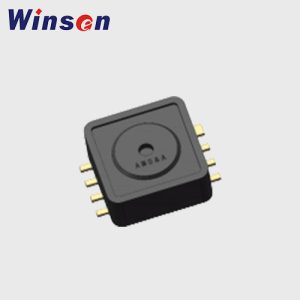
Micro-Electro-Mechanical Systems enable miniaturization.
Used in smartphones, fitness trackers, and wearable medical devices.
15. Conclusion
Gauge pressure is a practical and widely used pressure reference method in everyday life and across multiple industries. It is straightforward to understand and interpret, and it aligns well with most real-world use cases where pressure relative to ambient conditions matters most.
Despite its simplicity, selecting the right gauge pressure sensor still requires a good understanding of the application, environmental conditions, and system requirements. In modern engineering systems, gauge pressure sensors are increasingly integrated into digital and wireless networks, contributing to smarter, safer, and more efficient operations.