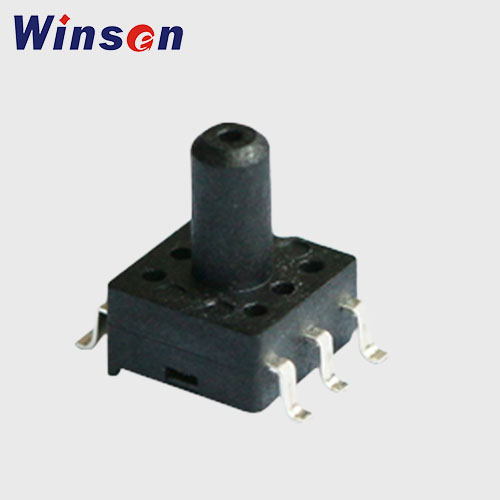
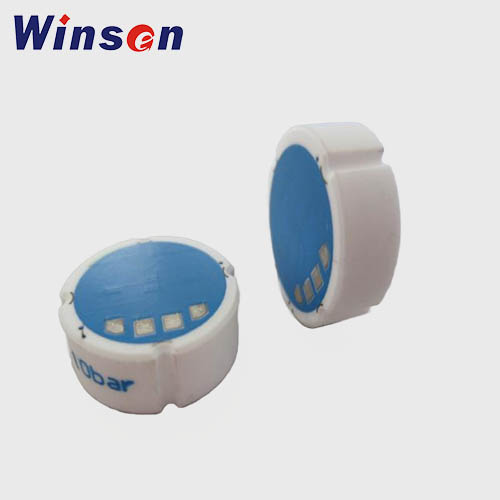
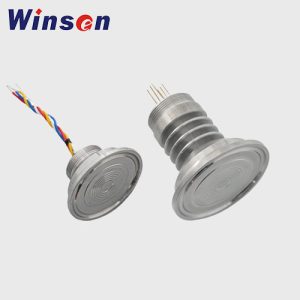
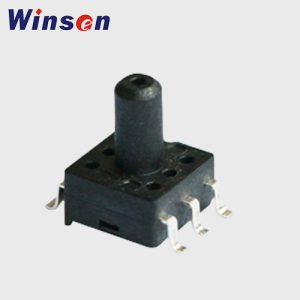
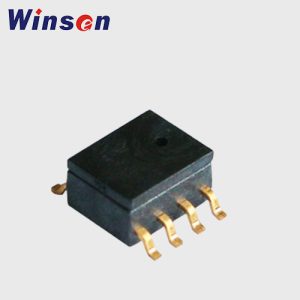
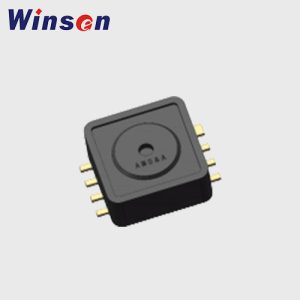
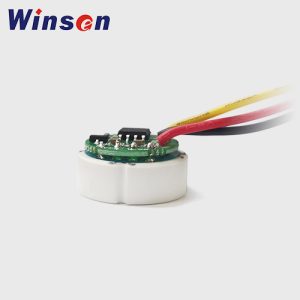
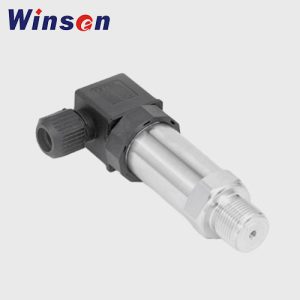
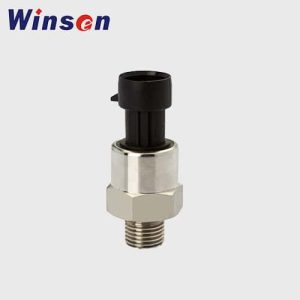
Winsen supplies low-range differential pressure (ΔP) sensors engineered for HVAC, cleanrooms, filter monitoring, VAV boxes, fume hoods, and process diagnostics. Our MEMS piezoresistive and capacitive cores deliver stable, low-noise readings from ±25 Pa up to ±100 kPa with analog (4–20 mA, 0–10 V, 0.5–4.5 V) and digital (I²C/SPI) outputs.
OEM/ODM • Private labeling • Fast lead time- ±25 Pa → ±100 kPa bidirectional ranges
- ±0.25%FS typ. accuracy options
- 0–10 V / 4–20 mA / I²C easy integration
- Zero/Span field calibration


Overview & Working Principle
A differential pressure sensor measures the pressure difference between two ports (High/Low). Winsen integrates a sensitive MEMS diaphragm, precision resistive/ASIC conditioning, and temperature compensation to output a linear signal proportional to ΔP. Bidirectional designs track positive and negative room pressure with the same device.
For air and non-condensing gases, barbed ports accept 4–6 mm tubing for fast installation. For liquid service, we provide isolated and corrosion-resistant interfaces. Choose ratiometric or I²C for embedded devices, or 4–20 mA/0–10 V for long cables and industrial PLCs.
Diffused Silicon Pressure Sensor
Ceramic Pressure Sensor
Plastic Sealed Pressure Sensor
Diffused Silicon Pressure Transmitter
Ceramic Pressure Transmitter
Glass Micro-Fusing Pressure Transmitter
Pressure Sensor and Transmitter Comparison Overview
| Category | Model | Power Supply / Output | Detection Range | Accuracy / Nonlinearity | Pressure Reference | Operating Temperature | Shell Material | Remarks |
| Diffused Silicon Pressure Sensor | WPAK70 | 1.5mA / mV | -100kPa ~ 0 ~ 10kPa…10MPa | ≤±0.3%FS | Gauge / Absolute / Sealed Gauge | -40℃ ~ 120℃ | – | High versatility, compact design |
| WPAK69 | 1.5mA / mV | -100kPa ~ 0 ~ 10kPa…10MPa | ≤±0.3%FS | Gauge / Absolute / Sealed Gauge | -40℃ ~ 120℃ | – | Similar to WPAK70 | |
| WPAK68 | 1.5mA / mV | -100kPa ~ 0 ~ 10kPa…100MPa | ≤±0.3%FS | Gauge / Absolute / Sealed Gauge | -40℃ ~ 120℃ | – | Extended range version | |
| WPAK67 | 1.5mA / mV | 0 ~ 10kPa…2.5MPa | ≤±0.3%FS | Differential Pressure | -40℃ ~ 120℃ | – | For differential applications | |
| WPAK66 | 1.5mA or 10V / mV | 6MPa…60MPa | ≤±0.3%FS | Sealed Gauge | -40℃ ~ 120℃ | – | Sealed design for higher ranges | |
| WPAK65 | 1.5mA or 10V / mV | -100kPa ~ 0 ~ 10kPa…16MPa | ≤±0.3%FS | Gauge / Absolute / Sealed Gauge | -40℃ ~ 120℃ | – | General-purpose sensor | |
| WPAK64 | 1.5mA or 10V / mV | -100kPa ~ 0 ~ 10kPa…25MPa | ≤±0.3%FS | Gauge / Absolute / Sealed Gauge | -40℃ ~ 120℃ | – | Moderate range coverage | |
| WPAK63J | 1.5mA / mV | -100kPa ~ 0 ~ 10kPa…100MPa | ≤±0.3%FS | Gauge / Absolute / Sealed Gauge | -40℃ ~ 120℃ | – | J-type version for special mounting | |
| WPAK63 | 1.5mA or 10V / mV | -100kPa ~ 0 ~ 10kPa…100MPa | ≤±0.3%FS | Gauge / Absolute / Sealed Gauge | -40℃ ~ 120℃ | – | Versatile with wide range | |
| Ceramic Pressure Sensor | WPAH01 | 2–20V / mV | 0 ~ 200kPa…40MPa | ≤±0.3%FS | – | -40℃ ~ 125℃ | – | High chemical resistance |
| Plastic Sealed Pressure Sensor | WPAS12 | Digital and analog | 15–115kPa | – | – | -40℃ ~ 125℃ | – | Cost-effective, compact |
| WPAS02 | Digital and analog | 10kPa ~ 100kPa | – | – | -20℃ ~ 80℃ | – | Basic sensor for air/gas | |
| WPAS01 | Digital and analog | 10kPa ~ 100kPa | – | – | -40℃ ~ 125℃ | – | Robust high-temp tolerance | |
| Diffused Silicon Pressure Transmitter | WPCK81 | 4–20mA, RS485 | 0 ~ 1m…200mH₂O | ±0.5%FS / ±1%FS | Gauge Pressure | – | Stainless steel | For deep-level and tank level measurements |
| WPCK62 | 4–20mA (Optional) | 0 ~ 35kPa…25MPa | ±0.5%FS | Gauge / Absolute / Sealed Gauge | – | Stainless steel | Widely compatible, thread options | |
| WPCK08 | 4–20mA, RS485 | 0 ~ 200mH₂O | ±0.5%FS | Gauge Pressure | – | Stainless steel | Explosion-proof version | |
| WPCK07 | 4–20mA, 0.5–4.5V, 0–5V, 1–5V, 0–10V, 1–10V | -100kPa ~ 0 ~ 10kPa…100MPa | ±0.5%FS | Gauge / Absolute / Sealed Gauge | – | Stainless steel | Full-range output types | |
| WPCK05 | 0.5–4.5V, 0–5V, 1–5V, 0–10V, 1–10V | -100kPa ~ 0 ~ 10kPa…100MPa | ±0.5%FS | Gauge / Absolute / Sealed Gauge | – | Stainless steel | Voltage output options | |
| WPCK03 | I²C, 4–20mA, 0.5–4.5V and more | -100kPa ~ 0 ~ 10kPa…100MPa | ±0.2%FS, ±0.5%FS (custom) | Gauge / Absolute / Sealed Gauge | – | Stainless steel | Flexible signal types, high accuracy | |
| Ceramic Pressure Transmitter | WPCH04 | 0.5–4.5V (Customizable) | 0.2MPa…40MPa | 0.1%FS (Default) | – | – | Stainless steel | High precision ceramic core |
| WPCH01 | 4–20mA, 0/1–5/10V, 0.5–4.5V | 0.2–5MPa | 0.1% ~ 5.0%FS (Default 2.0%) | – | – | Stainless steel | Customizable, versatile outputs | |
| WPBH01 | Proportional voltage (0.5–4.5V) | 2–400 bar (Customizable) | 0.5%, 1%, 2% (Default), 3% | – | – | Stainless steel | Broad pressure range | |
| Glass Micro-Fusing Transmitter | WPCK89 | Digital and analog | 0 ~ 100 / 150 / 250 / 500 psig | ±1%FS | – | – | Stainless steel | Extremely robust and thermally stable |
Selection Guide
Use the matrix below to choose the right ΔP sensor. Our team will finalize calibration after reviewing your environment and tubing layout.
| Use Case | Recommended Range | Media | Preferred Output | Ports & Connections | Notes |
|---|---|---|---|---|---|
| Cleanroom pressurization | ±25 to ±250 Pa | Air | 0–10 V or I²C | Barbed 4–6 mm; JST/Molex | Enable averaging filter to reduce door-opening spikes. |
| Filter status (AHU) | ±250 Pa to ±2 kPa | Air | 4–20 mA | Barbed ports; M12/DIN via harness | Use 4–20 mA for long runs and noise immunity. |
| VAV & duct measurement | ±50 Pa to ±1 kPa | Air | 0.5–4.5 V ratiometric | Board-level or compact module | Pair with a Pitot or flow element for airflow calculation. |
| Fume hood face velocity | ±50 Pa to ±500 Pa | Air | 0–10 V / I²C | Barbed ports; shielded cable | Enable offset auto-zero on power-up. |
| Process orifice/flow | ±2 kPa to ±100 kPa | Gas/Liquid | 4–20 mA | Isolated diaphragm adapters | Check liquid compatibility and maximum static pressure. |
Applications & Industries
HVAC & Building Controls
Room pressurization, isolation rooms, VAV, AHU filter status, stairwell pressurization, duct airflow.
Healthcare & Cleanrooms
Monitor positive/negative pressure differentials and air changes per hour for GMP environments.
Laboratory Safety
Fume hood face velocity control and sash interlocks using stable low-Pa sensors.
Process & Utilities
Orifice and filter ΔP in gas/liquid skids, blower monitoring, burner air control, leak detection.
Instruments & IoT
Portable analyzers, smart thermostats, and data loggers with low-power digital outputs.
Education & R&D
Wind tunnels, flow benches, and environmental test rigs requiring fast dynamic response.
Why Global Clients Choose Us?
The company consistently adheres to the quality policy of “Fine Craftsmanship, Scientific Innovation, Pursuit of Excellence, and Value-Added Service.” By formulating production process control plans and work instructions, it has established a standardized, accountable, and regulated process management system. Additionally, the company has independently developed an MES production management system, enabling comprehensive and visual management across the entire workflow.

30+ YEARS OF EXPERIENCE
R&D, manufacture and sales of sensors and sensing solutions.
QUALITY GUARANTEE CONTINOUS IMPROVEMENT
Complete and rigid process flow control, coupled with significant improvements.


INTERNATIONAL MARKET
Deliver sensing products to more than 100 countries and regions.
STABLE SUPPLY CHAIN RELIABLE PRODUCTION
Core components not subject to constraints, advanced equipments for manufaturing and test.


R&D STRENGTH TECHNOLOGY INNOVATION
200+ patents, 180+ R&D team members, self-built labs for continous innovation.
ONE-STOP SERVICE
Professional consultation, fast delivery, 24 hours after-sales support.

Leading the Industry, Innovative & Controllable Technology
With robust R&D capabilities, we maintain sustained input in R&D and unwavering commitment to technological innovation. This not only ensures that we remain at the forefront of industry but also drives continuous innovation, leading the future trend of the sensing industry.
10% R&D Input
The average annual R&D input exceeds 10% of the annual revenue.
5+ R&D Layout
With Zhengzhou headquarters as the core, a nationwide R&D and innovation system is being established, encompassing cities of Shanghai, Wuhan, Shenzhen, and Taiyuan.
180+ R&D Team
There are over 180 R&D personnel, including more than 10 with doctoral degrees and over 50 with master's degrees, who have an average of more than 8 years of experience in sensor development.
20+ Experiment Types
Gas-related, Climatic Environment, EMC, Electrical Performance, Mechanical Performance, etc.
10+ Advanced Laboratories
CNAS Laboratory, MEMS Laboratory, UL Laboratory, Nanocomposite Materials Laboratory, etc.
400+ sets Leading R&D Equipment
Cube Storage, Die Bonder, Lithography Machine, Coating Machine, SMT Placement Machine, Automatic Probe Station, etc.
Key Specifications
| Measurement | Bidirectional differential (High–Low) or unidirectional |
|---|---|
| Ranges | ±25 Pa → ±100 kPa; custom ranges on request |
| Outputs | 4–20 mA (2-wire), 0–10 V / 0–5 V, 0.5–4.5 V ratiometric, I²C/SPI |
| Accuracy (typ.) | ±0.25%FS (options; model & range dependent) |
| Stability | ±0.2%FS/yr typical |
| Response Time | 2–10 ms (digital filtering configurable) |
| Compensated Temp. | −10 to 85 °C (options wider) |
| Operating Temp. | −20 to 85 °C air; consult liquid models |
| Overload / Burst | 2× / 5× FS typical (per model) |
| Ports | Barbed 4–6 mm, M5, 1/8-NPT, manifold or custom |
| Electrical | JST/Molex, cable pigtail, M12 via harness, custom headers |
| Protection | Reverse polarity; optional hydrophobic filter; IP-rated housings via transmitter |
Quality & Compliance
- 100% functional test and temperature compensation per specified span
- NIST-traceable calibration equipment; serialized labels for traceability
- Optional hydrophobic filters and splash guards for humid environments
- Datasheet and test report supplied with standard builds
Ordering & Bulk Purchasing
How to Specify
- Range & units (e.g., ±50 Pa, ±500 Pa, ±2 kPa, ±100 kPa)
- Output (4–20 mA, 0–10 V, 0.5–4.5 V, I²C/SPI)
- Port style (barbed size, M5, 1/8-NPT, manifold)
- Connector (JST, Molex, cable pigtail, M12 via harness)
- Environment (temperature, humidity/condensation, vibration)
- Calibration (zero/span, multi-point, filter constants)
Program Terms
- Samples for DFM and validation
- Tiered pricing for volume schedules
- Private labeling and custom packaging
- Rolling forecasts with safety stock options
Differential Pressure Sensor vs Transducer vs Transmitter
| Device | Output | Typical Use | Pros | Considerations |
|---|---|---|---|---|
| ΔP Sensor (board/compact) | Ratiometric / I²C / SPI | Embedded devices, instruments | Small, low-power, cost-effective | Requires host electronics and enclosure |
| ΔP Transducer | 0–10 V / 4–20 mA | PLC/DAQ measurement | Simple wiring, long cable runs | External display/relays not included |
| ΔP Transmitter | Conditioned + enclosure (often display/relays) | Field installation, panel mount | Rugged, installer-friendly | Largest size and highest cost |
Not sure which to choose? Share your controller model and mounting location—we’ll recommend the right package.
Frequently Asked Questions (FAQ)
How do I convert differential pressure to airflow?
Use a flow element (Pitot tube/orifice) with a K-factor. Airflow ≈ K × √(ΔP/ρ). We can provide guidance on K-factor selection and sensor range.
How do I avoid zero drift from tubing orientation?
Mount ports horizontally where possible, use equal-length tubing, enable warm-up, and perform a zero with both ports open to ambient.
Can I measure slightly humid air?
Yes—use a hydrophobic vent/filter and route tubing to minimize condensate. For condensing or liquid service, choose our isolated designs.
What is the recommended cable for long runs?
For analog outputs, use shielded twisted pair; ground the shield at one end. For I²C/SPI, keep leads short or use differential transceivers.
Do you supply matched pairs for redundancy?
Yes. We can provide matched sensors with correlated calibration data and common labels for critical applications.