
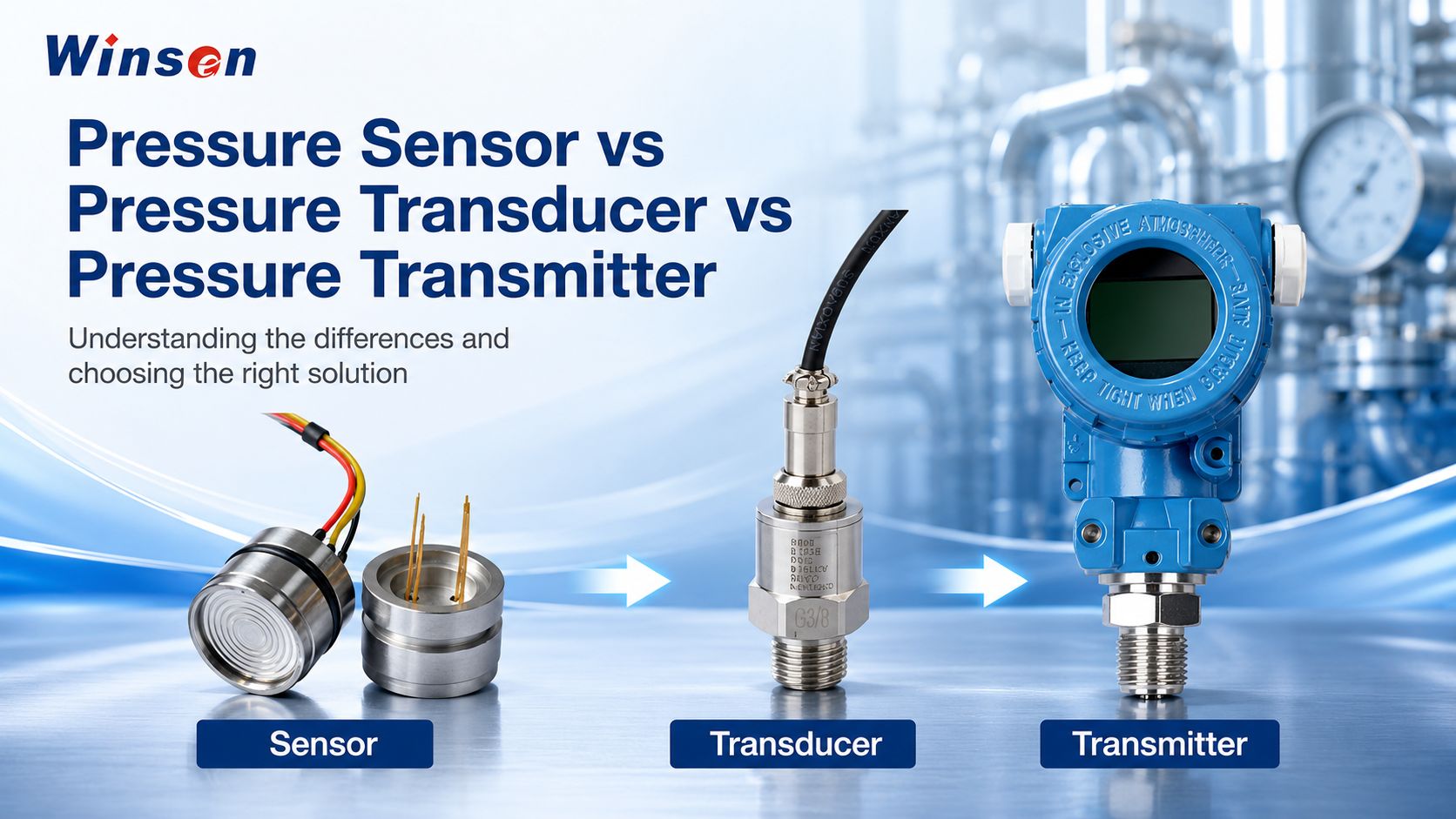
Dans les projets OEM réels, les problèmes de mesure de pression sont souvent causés par sélectionner le mauvais niveau d'intégration, pas par la puce de détection elle-même. « Capteur », « transducteur » et « transmetteur » sont fréquemment mélangés dans les appels d'offres, mais ils impliquent des responsabilités d'ingénierie différentes : conditionnement du signal, compensation de température, boîtier/IP, robustesse CEM et câblage sur site.
Cet article explique les différences pratiques et montre comment faire correspondre les exigences aux modèles Winsen à l'aide de notre liste de produits sous pression mise à jour.
1) Les problèmes de l’industrie qui font échouer la sélection
Problème A : « Fonctionne sur le banc, échoue sur le terrain »
Les causes profondes typiques sont les longs parcours de câbles, les problèmes EMI/terre, la pénétration d'humidité et les cycles de température. Si votre système se connecte à un câblage API/à distance, un élément brut n'est généralement pas suffisant : choisissez un module conditionné ou un transmetteur prêt à l'emploi.
Problème B : Corrosion, support sale, colmatage
Lorsque le fluide est corrosif ou contient des particules, vous avez généralement besoin d'un isolation structure (film isolant rempli d'huile ou diaphragme affleurant) pour protéger l'élément de détection et réduire la croissance de la dérive/hystérésis.
Problème C : vitesse d'intégration par rapport à l'optimisation de la nomenclature
OEMs either:
- integrate a core sensor (lowest BOM, but you own analog & calibration), or
- choisir un module/transmetteur (intégration plus rapide, plus grande cohérence en production).
2) Clear definitions
2.1 Pressure Sensor
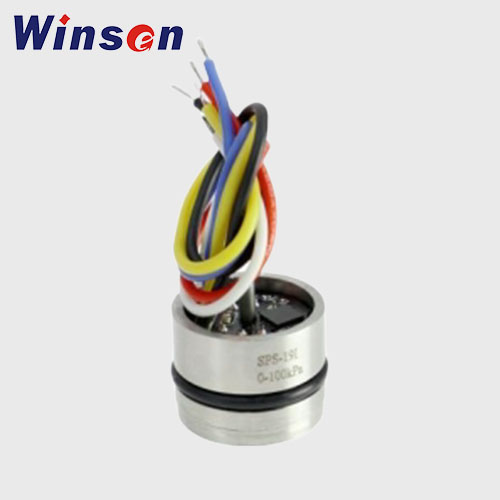
UN capteur de pression fait généralement référence à l'élément sensible à la pression (ou à l'assemblage central) qui convertit la pression en un signal électrique, souvent Sortie pont mV/V ou analogique de bas niveau qui nécessite votre propre stratégie d'amplification et de compensation.
Meilleur quand
- Vous possédez l'électronique et l'étalonnage
- Vous avez besoin d’un emballage mécanique personnalisé ou d’un contrôle strict de la nomenclature
Exemples Winsen (niveau capteur/noyau)
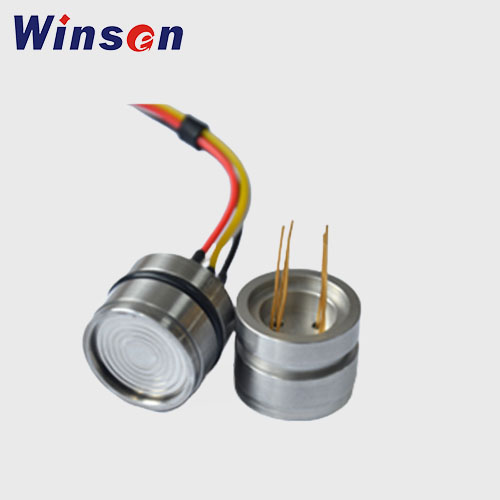
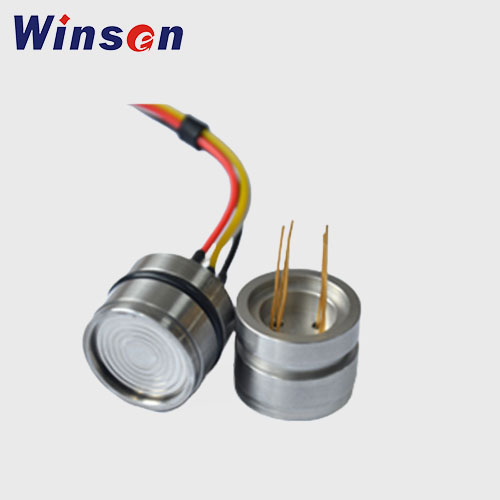
- Capteur de pression en céramique WPAH01 (noyau) – film sensible céramique piézorésistif, calibrage laser zéro/pleine échelle, Ø18×6,35 mm, 2 à 400 bars, -40 à 125°C, diaphragme en céramique.
- Capteur de pression en céramique WPAH31 (noyau) – diaphragme en céramique avec découpe laser, gammes comprenant 2/5/10/20/40/50/100 bars (en option); spécifications typiques de sensibilité et de stabilité répertoriées, et Surcharge nominale 2× décrit.
- Capteur de pression à film isolant WPAK63 (noyau) – membrane/boîtier 316L, remplissage d'huile de silicone, indices de chocs/vibrations et de cycle de vie répertoriés (structure d'isolation remplie d'huile).
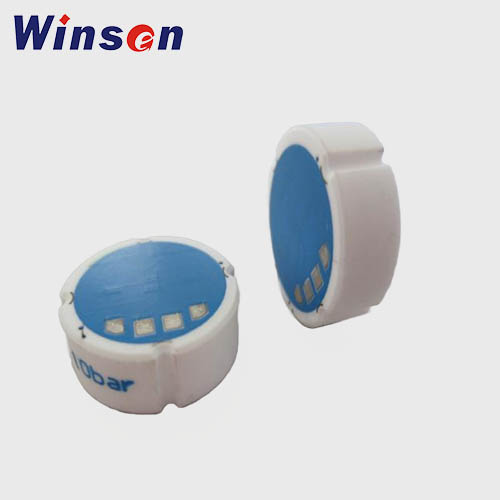
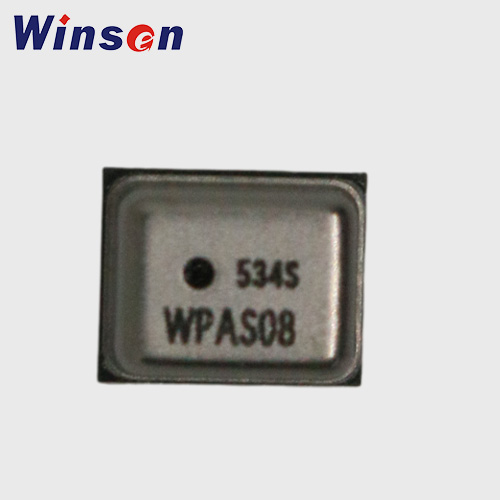
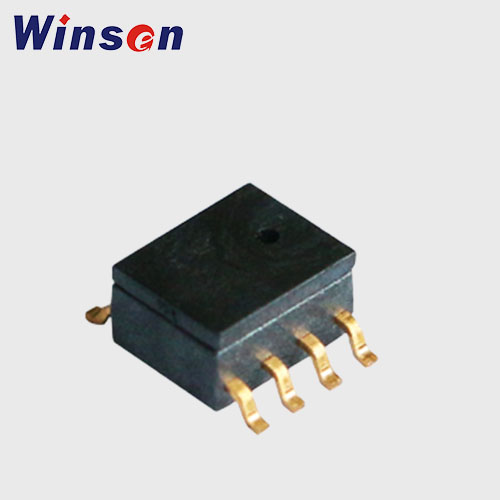
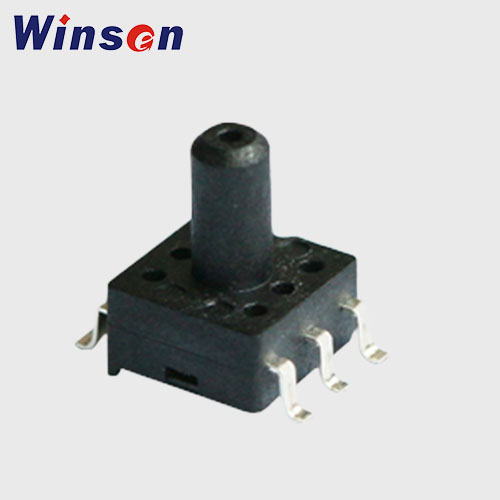
- Capteur de pression dans un emballage en plastique WPAS01 (noyau) – MEMS, SOP8, Réponse ≤1 ms, large plage de pression répertoriée jusqu'à 1,7 MPa, -40 à 125°C, paramètres de sortie typiques en mV.
- Capteur de pression dans un emballage en plastique WPAS02 (noyau) – MEMS, SOP6, Réponse ≤1 ms, plages de pression répertoriées depuis le vide/faible kPa jusqu'à 200 kPa, -40 à 125°C.
2.2 Transducteur de pression (dispositif de conversion emballé pour l'intégration OEM)
Dans de nombreuses spécifications OEM, « transducteur de pression » désigne généralement un appareil emballé qui génère un signal plus utilisable qu'un pont brut, souvent sortie de tension standard—pour réduire votre charge de travail analogique.
Meilleur quand
- Vous souhaitez une intégration plus rapide dans un système MCU/ADC sans créer une chaîne analogique complète à partir de mV/V
Exemple Winsen (niveau module/transducteur)
- Module de capteur de pression en céramique WPBH01 – Ø18×11.8 mm, range 2 à 400 bars, Alimentation 5 V, sortir 00,5 à 4,5 V (standard), plusieurs niveaux de précision, options de température de compensation répertoriées.
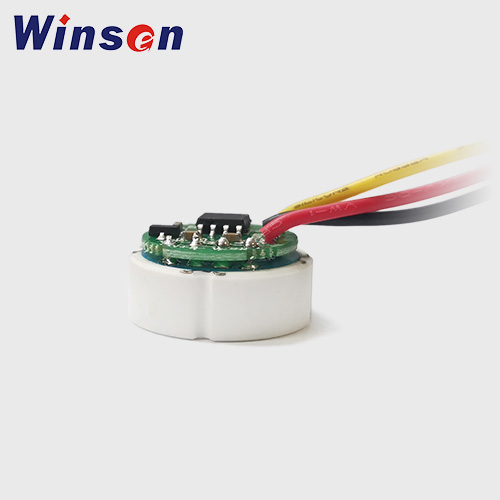
2.3 Transmetteur de pression (niveau d'instrumentation prêt sur le terrain)
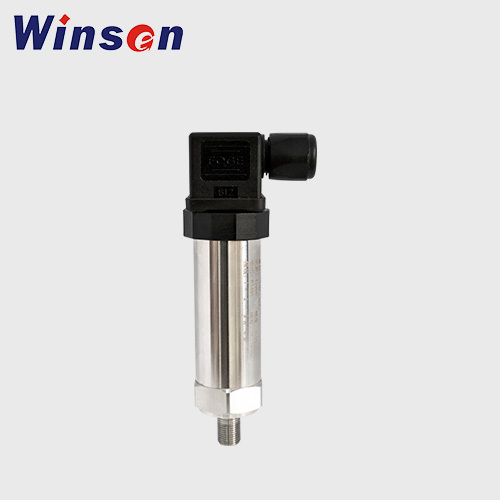
UN émetteur de pression est un dispositif complet comprenant amplification + compensation de température + emballage industriel, et fournit des sorties standardisées adaptées au câblage d'équipement réel (par exemple, 4 à 20 mA, tension ou bus numérique).
Meilleur quand
- Vous vous connectez à un PLC/DCS/SCADA ou à de longs câbles
- Vous avez besoin d’un résultat cohérent dans l’ensemble de l’environnement et de la production
Exemples Winsen (transmetteurs de pression)
- Transmetteur de pression en céramique WPCH01 – signal de sortie répertorié comme Courant / Tension / I²C (personnalisable), multiple connections, IP67, cibles de surcharge et de stabilité répertoriées.
- Transmetteur de pression en céramique WPCH04 – plage de détection répertoriée jusqu'à 40 MPa, sortir 4 à 20 mA / 0 à 5 V / 0,5 à 4,5 V (personnalisable), plusieurs connexions mécaniques, réponse rapide, caractéristiques anti-interférence et cohérence répertoriées.
- Transmetteur de pression au silicium diffusé WPCK03 (numérique) - sortir I²c, pressure references Jauge / jauge absolu / scellée, large plage de pression répertoriée jusqu'à 100 MPa, faible courant, boîtier/diaphragme 316L répertorié.
- Transmetteur de pression au silicium diffusé WPCK07 (RS485) – décrit comme utilisant un circuit centré sur un microprocesseur et fournissant Rs485 sortie de communication pour le débogage et l'étalonnage numériques.
- Transmetteur de pression à sortie numérique WPCK89 – described with IIC bus up to 400K, Taux de collecte de 50 échantillons/sec, faible puissance et forte protection anti-interférence à plusieurs niveaux.
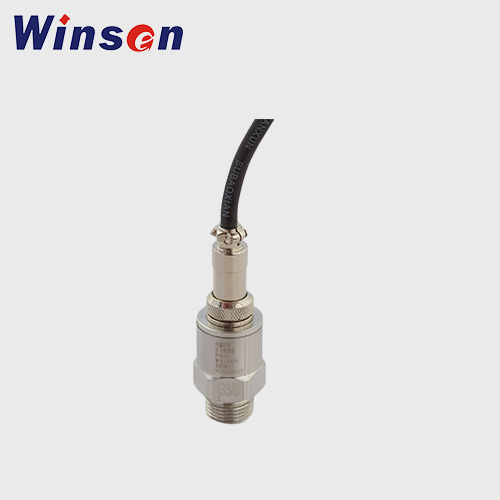
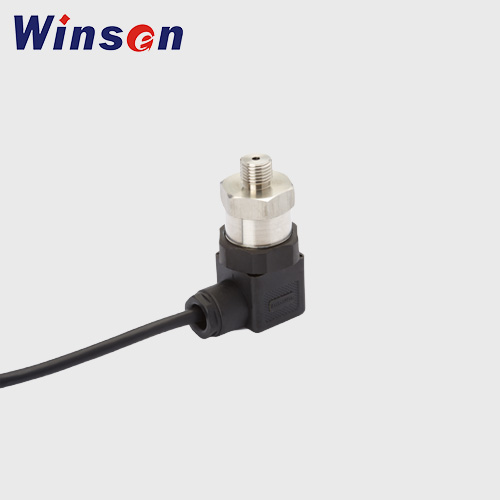
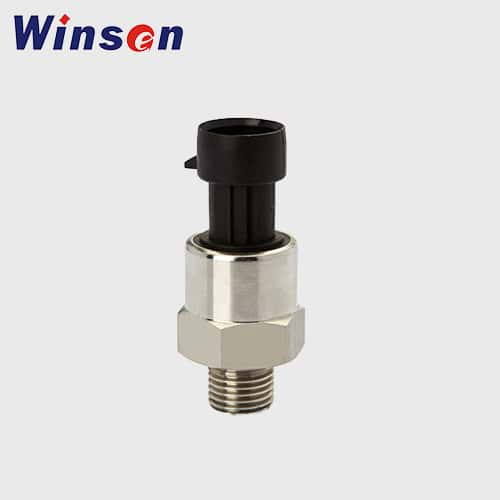
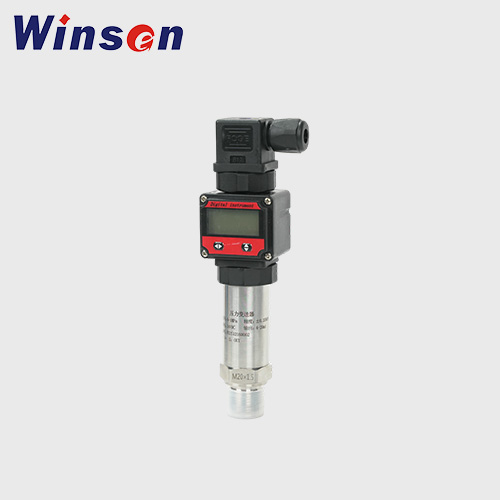
Version d'affichage numérique de transmetteur de pression de silicium diffusé WPCK07
- 0~25MPa
- En savoir plus
3) « échelle d'intégration » Winsen (logique de sélection rapide)
Choisissez d'abord le niveau d'intégration, puis choisissez la technologie et la structure :
Capteur central (mV/V ou bas niveau) → idéal pour les OEM disposant de leur propre calibrage analogique +
- WPAH01 / WPAH31 / WPAK63 / WPAS01 / WPAS02
Module/transducteur (module de sortie de tension) → intégration MCU la plus rapide
- WPBH01 (0.5–4.5 V)
Transmetteur (câblage industriel + compensation + IP) → idéal pour les applications sur le terrain
- WPCH01 / WPCH04 / WPCK03 / WPCK07 / WPCK89
4) Liste de contrôle des exigences (copier/coller pour la demande de prix OEM)
4.1 Définition de la pression (éviter l'erreur n°1)
- Pressure reference: Jauge / Absolu / Différentiel / Jauge scellée (PSIS)
- Plage de travail + pics (attente de preuve/éclatement)
- Exigence de temps de réponse (boucle de contrôle vs surveillance)
Lecture réelle : Pression absolue par rapport à la pression manométrique par rapport à la pression différentielle
4.2 Output & system architecture
- Noyau mV/V contre voltage module contre 4–20 mA / tension / I²C / transmetteur RS485
- Tension d'alimentation, longueur de câble, environnement CEM
4.3 Média + interface mécanique
- Gaz sec vs liquide ; corrosif vs non corrosif
- Besoin d'un film isolant/d'une membrane affleurante ?
- Connexion : G, NPT, M20 × 1,5, etc. (la série WPCH répertorie plusieurs options)
4.4 Modèle de précision
- %FS / %lecture, plage de température compensée
- Hystérésis/répétabilité, dérive à long terme
5) Correspondance des produits par application (recommandations Winsen)
A) Micro pression différentielle (filtres CVC, flux d'air, salle blanche)
- WPAS13 Micro capteur de pression différentielle numérique – plage de pression de fonctionnement -500 à +500 Pa, alimentation 1,8-3,6 V, résolution 20 bits, faible courant de fonctionnement répertorié (à 1 Hz).
B) Milieux durs/corrosifs et stabilité à long terme
- Approche du noyau céramique : Wpah01 /WPAH31 (diaphragme en céramique, résistance aux surcharges et à la corrosion décrites)
- Approche du film d'isolation (isolation du support nécessaire) : Wpak63 (316L + remplissage d'huile silicone)
C) Interface de processus nécessitant une structure à membrane affleurante
- Capteur de pression à membrane affleurante WPAK77 avec pince – plage de détection répertoriée 0–10 kPa … 6 MPa.
D) Pompes / compresseurs / eau intelligente / contrôle général de la pression industrielle
- Transmetteur céramique prêt à l'emploi : WPCH01 (Courant/Tension/I²C, IP67, cibles de stabilité et de surcharge répertoriées)
- Gamme supérieure + sorties standards multiples : WPCH04 (4 à 20 mA / 0 à 5 V / 0,5 à 4,5 V)
E) Systèmes OEM numériques (interface bus + anti-interférence)
- WPCK03 (I²C + jauge/absolue/jauge scellée)
- WPCK89 (bus IIC 400K, 50 échantillons/sec, faible consommation, anti-interférence)
- WPCK07 (Sortie RS485 pour le débogage/calibrage numérique)
F) OEM sensible aux coûts / intégration compacte
- WPAS12 – sortie analogique intégrée ; sortie de tension proportionnelle à l'alimentation ; plage de sortie analogique 00,18 à 4,65 V sur 15 à 115 kPa absolus décrit.
- WPAS01 /WPAS02 - Noyaux MEMS en plastique pour l'assemblage du module (paramètres de sortie au niveau mV répertoriés).
7) FAQ rapide
Un transducteur de pression est-il la même chose qu'un transmetteur de pression ?
Sur le marché, le terme « transducteur » est souvent utilisé de manière vague. Pour la sélection d'ingénieurs, un émetteur est généralement l'appareil prêt à l'emploi avec des sorties standardisées et une protection du boîtier, tandis qu'un module/transducteur Il s'agit souvent d'une étape d'intégration de niveau intermédiaire (par exemple, module de tension sans coque d'émetteur).
Quand dois-je choisir 4-20 mA ?
Choisissez 4 à 20 mA lorsque vous avez besoin d'un câblage industriel robuste, de câbles plus longs et d'une immunité au bruit plus forte (le WPCH04 répertorie 4 à 20 mA comme option de sortie).
Quand dois-je choisir une jauge scellée (PSIS) ?
Lorsque votre environnement de référence est scellé (non ventilé dans l'atmosphère actuelle), spécifiez une jauge scellée pour éviter les erreurs de référence. Listes WPCK03 Jauge / jauge absolu / scellée références.
