1. Introduktion
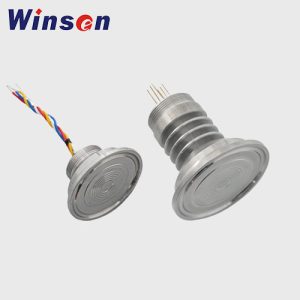
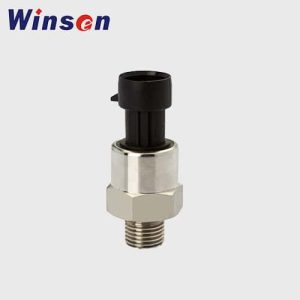
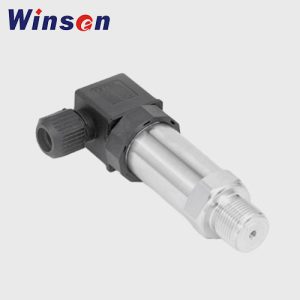
Metal diaphragm sensors are essential devices used to measure pressure, level, and other physical parameters in a wide range of industrial, medical, and environmental applications. These sensors utilize a thin, flexible metal membrane—known as a diaphragm—that deforms under pressure and translates this deformation into a readable signal, either mechanical or electrical.
They are prized for their robustness, corrosion resistance, and suitability for aggressive media, including high-temperature gases, viscous fluids, and corrosive chemicals. This article provides a comprehensive exploration of metal diaphragm sensors, covering their construction, operating principles, types, performance factors, and real-world applications.
2. What Is a Metal Diaphragm Sensor?
EN metal diaphragm sensor is a pressure-sensitive device that incorporates a metallic membrane to detect pressure variations. When pressure is applied, the diaphragm flexes, and this mechanical deformation is converted into a measurable signal—via strain gauges, capacitive changes, piezoresistive elements, or mechanical linkages.
De metal diaphragm serves both as the sensing interface and a barrier that protects the internal components from harsh or contaminated environments.
3. Materials Used in Metal Diaphragms
The choice of diaphragm material significantly impacts the sensor’s chemical resistance, elasticity, temperature tolerance, and durability.
Common Materials
| Materiale | Characteristics | Applikationer |
|---|---|---|
| Stainless Steel (304/316) | Corrosion-resistant, strong, cost-effective | General industrial processes |
| Hastelloy | Resistant to strong acids and oxidizing agents | Chemical processing and marine use |
| Inconel | High strength and oxidation resistance | Aerospace and high-temperature use |
| Monel | Good resistance to seawater and steam | Marine and oil & gas |
| Tantalum | Excellent for corrosive acids (e.g., HCl) | Pharmaceutical, nuclear |
| Titanium | Lightweight, corrosion-resistant | Medical and marine industries |
4. Working Principle
The working mechanism of metal diaphragm sensors involves converting mechanical strain from the diaphragm’s deflection into an electrical signal or mechanical displacement.
4.1 Basic Principle
- Pressure is applied to one side of the diaphragm.
- The diaphragm deflects according to the pressure magnitude.
- The deformation is sensed by a transducer element.
- The sensor outputs a signal proportional to the pressure.
4.2 Transduction Methods
| Metode | Beskrivelse |
|---|---|
| Silmåler | Electrical resistance changes with diaphragm strain |
| Kapacitiv | Capacitance varies with distance between diaphragm and plate |
| Piezoresistive | Silicon elements bonded to diaphragm sense stress |
| Optisk | Light path changes with diaphragm movement (fiber optics) |
| Inductive | Diaphragm motion affects inductance in a coil system |
5. Types of Metal Diaphragm Sensors
5.1 Pressure Sensors
Used to measure absolute, gauge, or differential pressure in gases or liquids. Types include:
- Flush Diaphragm Pressure Sensors
- Threaded Diaphragm Sensors
- Remote Diaphragm Seals (isolated from media via oil fill)
5.2 Differential Pressure Sensors
Incorporate two diaphragms or a central diaphragm to detect the pressure difference between two process lines.
5.3 Level Sensors
Used to measure the hydrostatic pressure at the base of a tank, which is proportional to the liquid level.
5.4 Load and Force Sensors
Convert applied mechanical force into pressure through diaphragm deflection.
5.5 Vacuum Sensors
Detect low or negative pressure environments using a metal diaphragm that deflects toward the vacuum side.
6. Diaphragm Design Considerations
6.1 Thickness
- Thin diaphragms: High sensitivity but lower durability.
- Thick diaphragms: High durability but reduced sensitivity.
6.2 Corrugation
Corrugated or convoluted diaphragms enhance flexibility and displacement without sacrificing strength.
6.3 Shape
- Flat: Common in sanitary or flush-mount applications.
- Convoluted/Bellows: Greater deflection range and durability.
6.4 Welded vs. Bonded
- Welded diaphragms: High integrity and pressure resistance.
- Bonded diaphragms: May be easier to manufacture, but less robust.
7. Sensor Integration and Packaging
7.1 Electrical Output Options
- Analog (mV, V, mA)
- Digital (I²C, SPI, Modbus)
- Ratiometric or non-ratiometric outputs
7.2 Media Isolation
The diaphragm can act as a seal, with the sensor element isolated using:
- Fill fluids (e.g., silicone oil, glycerin)
- Hermetically sealed cavities
- Diaphragm seals (remote) for high-purity or corrosive environments
8. Performance Characteristics
| Parameter | Beskrivelse |
|---|---|
| Nøjagtighed | Difference between measured and actual pressure |
| Repeatability | Consistency of results under the same conditions |
| Hysterese | Deviation in output when pressure is applied and removed |
| Linearitet | Deviation from an ideal linear response |
| Overpressure Limit | Maximum pressure the sensor can tolerate without damage |
| Burst Pressure | Pressure at which permanent damage or rupture occurs |
| Temperaturdrift | Change in output with temperature variations |
9. Advantages of Metal Diaphragm Sensors
- Corrosion resistance: Suitable for aggressive chemicals and high-humidity environments.
- High-pressure capability: Can measure very high pressures accurately.
- Langsigtet stabilitet: Metal structures resist fatigue and environmental degradation.
- Hygienic designs: Ideal for sanitary applications in food and pharma industries.
- Wide temperature range: From cryogenic to high-heat environments.
- Mechanical durability: Resistant to vibration and mechanical shock.
10. Challenges and Limitations
- Koste: Exotic materials like tantalum or Hastelloy can be expensive.
- Complexity: Welded or filled designs add to manufacturing complexity.
- Thermal effects: Diaphragm sensitivity can vary with temperature.
- Non-linearity: Requires compensation circuits in high-accuracy applications.
- Creep: Long-term deformation under sustained pressure may cause drift.
11. Applications of Metal Diaphragm Sensors
11.1 Oil & Gas Industry
- Pressure and flow monitoring in pipelines and wellheads.
- Corrosion-resistant sensors for sour gas (H₂S).
11.2 Chemical and Petrochemical Plants
- Detecting pressure in reactive or toxic chemical processing systems.
11.3 Food & Beverage Processing
- Hygienic sensors with flush metal diaphragms for CIP (clean-in-place) operations.
11.4 Medical Devices
- Blood pressure monitoring and anesthesia equipment.
- Sterilizable and biocompatible materials like titanium used.
11.5 Power Generation
- Monitoring steam lines, cooling systems, and turbine pressure.
11.6 HVAC and Refrigeration
- Pressure sensing in refrigerant lines and compressors.
11.7 Marine and Subsea
- Depth measurement and pressure monitoring in corrosive saltwater.
12. Trends and Innovations
12.1 Digital Metal Diaphragm Sensors
Combining traditional diaphragm sensing with digital signal processing to improve accuracy, diagnostics, and interface compatibility.
12.2 MEMS + Metal Hybrid
Using MEMS strain gauges on metal diaphragms for compact yet rugged sensors.
12.3 Wireless Diaphragm Sensors
Battery-powered wireless pressure sensors for remote or hard-to-access installations, including IIoT (Industrial Internet of Things).
12.4 Additive Manufacturing
3D-printed metal diaphragms enable rapid prototyping and custom geometries.
13. Comparison with Other Sensor Technologies
| Funktion | Metal Diaphragm | Ceramic Diaphragm | Silicon MEMS |
|---|---|---|---|
| Korrosionsbestandighed | Excellent (material-dependent) | Good (alkaline-resistant) | Moderate (needs isolation) |
| Trykområde | Wide (up to 1000 bar+) | Moderat | Limited (typically <30 bar) |
| Temperaturområde | Very high | Moderat til høj | Lower |
| Koste | Medium til høj | Lav til medium | Low (mass produced) |
| Hygienic Use | Excellent (flush design) | Poor | Poor (requires packaging) |
14. Conclusion
Metal diaphragm sensors are crucial components in modern sensing systems, offering a balance of precision, durability, and chemical resistance. From high-pressure oil rigs to ultra-hygienic food production lines, these sensors perform reliably in demanding conditions.
As manufacturing technology and material science advance, metal diaphragm sensors will continue to evolve—offering smarter, more compact, and connected solutions. Their proven reliability, adaptability to extreme environments, and compatibility with various transduction methods ensure their continued importance in industrial automation, process control, medical systems, and environmental monitoring.