Capacitive sensors are versatile and widely used devices capable of detecting a variety of physical quantities such as proximity, displacement, pressure, humidity, and material properties. They operate based on changes in capacitance due to the variation in dielectric properties or the distance between conductive surfaces.
Due to their high sensitivity, fast response time, and non-contact sensing capability, capacitive sensors have become essential components in modern technology—from touchscreen devices and automation systems to fluid-level sensing and biometric applications.
This article explores the underlying principles, design, types, advantages, limitations, and applications of capacitive sensors in detail.
2. What Is a Capacitive Sensor?
A capacitive sensor is an electronic device that detects and measures changes in capacitance caused by the presence or movement of an object, changes in environmental conditions, or variation in material properties.
2.1 Capacitance Basics
Capacitance C is defined as the ability of a system to store an electric charge per unit voltage:
Where:
Capacitive sensors detect changes in , , or .
3. Working Principle of Capacitive Sensors
Capacitive sensors typically consist of two conductive plates forming a capacitor. When the dielectric between the plates changes (either by material presence or distance variation), the capacitance alters.
3.1 Types of Detection Mechanisms
Proximity Detection: Measures changes in capacitance when a conductive or dielectric object nears the sensor.
Displacement Measurement: Detects changes in distance between sensor plates and target.
Material Characterization: Senses changes in permittivity caused by different materials or moisture content.
4. Construction of Capacitive Sensors
Capacitive sensors can be constructed using various geometries and materials, depending on the intended application.
4.1 Common Elements
Electrodes: Typically made from copper, aluminum, or conductive inks.
Dielectric Material: Air, plastic, glass, or other insulators.
Substrate: Can be rigid (e.g., PCB) or flexible (e.g., polyimide film).
4.2 Electrode Configurations
Parallel Plate: Used for high-precision measurements.
Co-planar: Electrodes lie on the same plane, often used in touchscreens.
Interdigitated: Fingers of electrodes interleaved to increase sensitivity and surface area.
5. Types of Capacitive Sensors
5.1 Touch Sensors
Found in smartphones, tablets, and touchpads.
Detect the change in capacitance caused by the presence of a finger.
5.2 Proximity Sensors
Used in automation and safety systems.
Detect when an object approaches the sensor field.
5.3 Displacement Sensors
Measure minute positional changes with high accuracy.
Often used in metrology and precision engineering.
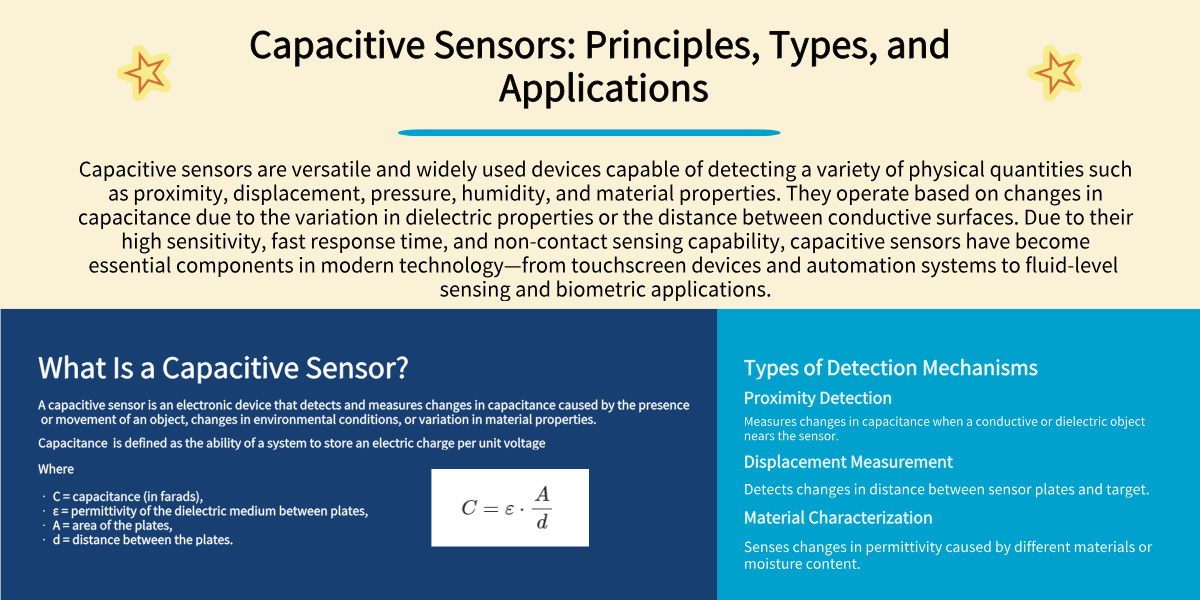
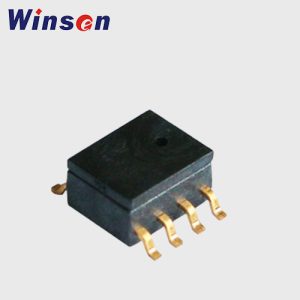
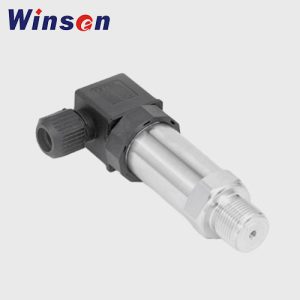
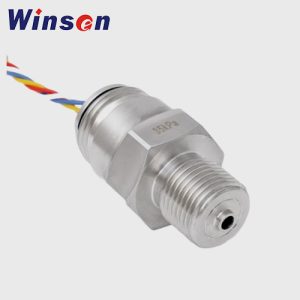
5.4 Pressure Sensors
Convert pressure-induced deformation into a change in capacitance.
Used in medical devices, HVAC systems, and fluid pressure monitoring.
5.5 Humidity Sensors
Use hygroscopic materials that change dielectric constant as they absorb moisture.
Common in environmental monitoring and smart home systems.
5.6 Level Sensors
Measure liquid or granular material levels based on dielectric changes.
Converts capacitance changes into high-resolution images.
Emerging in biometric scanners and medical diagnostics.
14. Case Study: Capacitive Water Level Sensor
Objective: Measure water level in a plastic tank without contact.
Design:
Interdigitated electrodes on the outside of the tank.
Senses change in dielectric constant (air vs. water).
Advantages:
No contamination risk.
No mechanical float or moving parts.
Challenges:
Requires compensation for temperature and wall thickness.
Needs high-resolution capacitance measurement.
15. Future Outlook
The future of capacitive sensing lies in:
Miniaturization using MEMS and nanotechnology.
Integration with wireless and IoT platforms.
Artificial intelligence for signal interpretation and self-calibration.
Multimodal sensing, combining capacitive with thermal, optical, or force sensors.
16. Conclusion
Capacitive sensors are indispensable in today’s technology landscape. Their ability to detect touch, proximity, pressure, humidity, and material properties in a non-contact, low-power, and compact manner makes them ideal for a wide range of industries.
While environmental sensitivity remains a challenge, advancements in signal processing, materials, and design techniques continue to enhance their performance and expand their applications. As smart devices become more prevalent and user interfaces evolve, capacitive sensing will remain a core component of the digital future.