
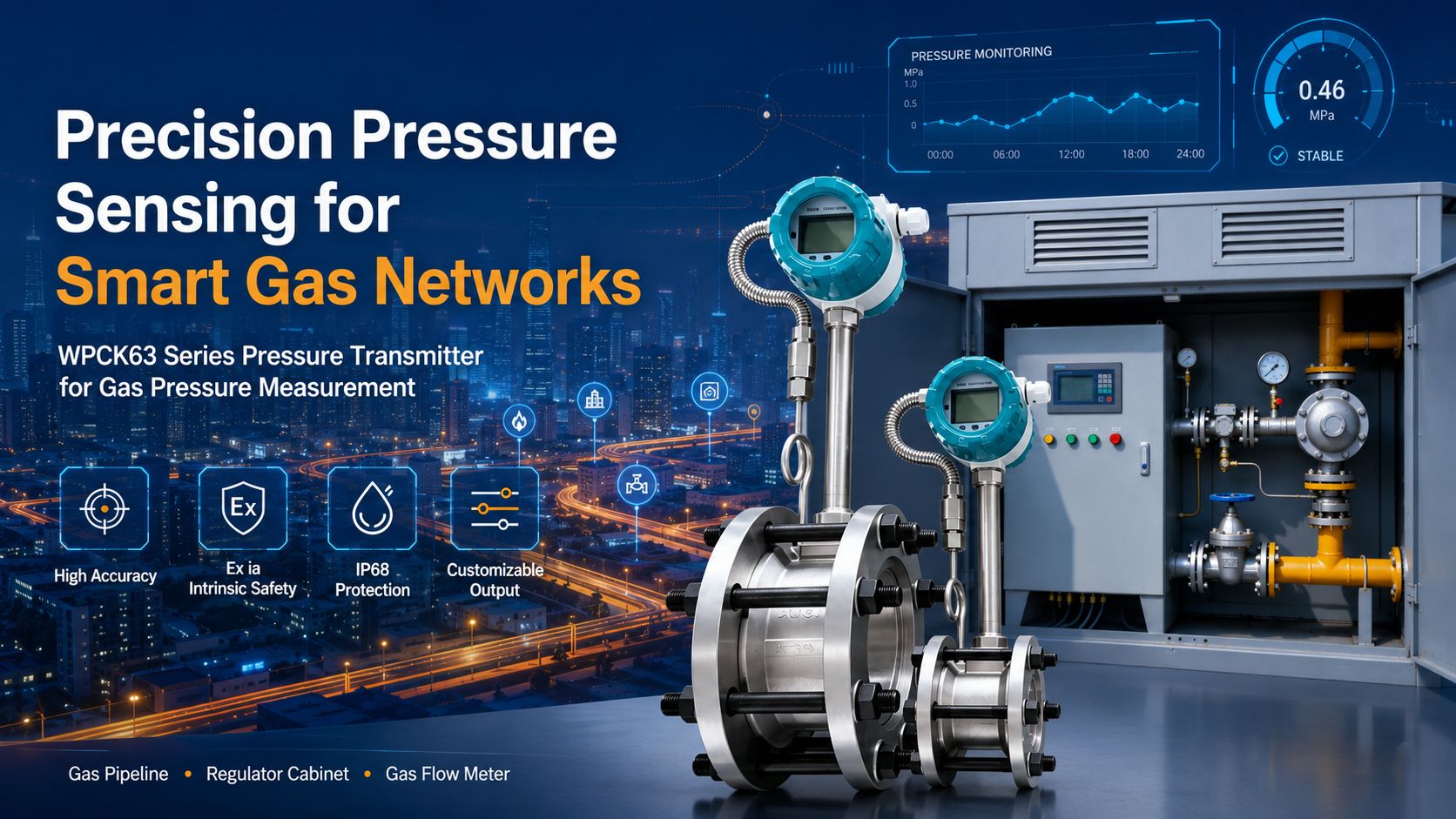
Cơ sở hạ tầng khí đốt đô thị là một phần quan trọng của việc cung cấp năng lượng hiện đại.
Trước khi khí tự nhiên đến các hộ gia đình, tòa nhà thương mại và người sử dụng công nghiệp, nó phải đi qua đường ống truyền tải, trạm cổng thành phố, mạng lưới phân phối khu vực, tủ điều tiết và thiết bị đo sáng. Áp suất thay đổi liên tục trong suốt hành trình này khi khí được vận chuyển, điều tiết và phân phối.
Tình trạng áp suất bất thường tại bất kỳ thời điểm nào có thể ảnh hưởng đến độ ổn định của nguồn cung cấp, độ chính xác của phép đo, hiệu suất của thiết bị hoặc độ an toàn của hệ thống.
Do đó, cơ sở hạ tầng khí đốt hiện đại đòi hỏi nhiều hơn các máy đo cơ học địa phương. Nó cần dữ liệu áp suất liên tục có thể được truyền đến bộ điều khiển, thiết bị đầu cuối giám sát và nền tảng quản lý kỹ thuật số để:
- giám sát vận hành theo thời gian thực;
- điều chỉnh áp suất;
- cảnh báo quá áp và thiếu áp;
- chẩn đoán thiết bị;
- bù dòng khí;
- điều khiển từ xa;
- bảo trì phòng ngừa.
Để hỗ trợ các ứng dụng này, chúng tôi đã phát triển Máy phát áp suất silicon khuếch tán WPCK63, một máy phát áp suất bằng thép không gỉ, nhỏ gọn được thiết kế để đo áp suất khí và các ứng dụng công nghiệp đòi hỏi khắt khe khác.
Với phản hồi nhanh, bù nhiệt độ rộng, phạm vi áp suất có thể định cấu hình, bảo vệ IP68 và các tùy chọn an toàn nội tại, WPCK63 cung cấp nền tảng cảm biến linh hoạt cho mạng khí thông minh.
Tại sao áp suất là thông số cốt lõi trong hệ thống khí
Mạng lưới cung cấp khí đốt hoạt động ở nhiều mức áp suất.
Một hệ thống điển hình có thể bao gồm:
- đường ống truyền tải cao áp;
- mạng lưới phân phối trung áp;
- trạm điều tiết khu vực;
- tủ điều hòa ngoài trời;
- đường ống dịch vụ áp suất thấp;
- đồng hồ đo khí thương mại và công nghiệp.
Mỗi phần đặt ra những yêu cầu khác nhau đối với bộ truyền áp suất.
Các điểm truyền áp suất cao yêu cầu phạm vi hoạt động phù hợp, khả năng chống quá tải và độ ổn định lâu dài. Mạng lưới phân phối áp suất trung bình phụ thuộc vào thông tin áp suất liên tục để duy trì sự cân bằng khu vực. Mạng lưới dịch vụ áp suất thấp yêu cầu độ phân giải đo lường đủ để xác định những dao động nhỏ hơn.
Tại tủ điều chỉnh, phải theo dõi cả áp suất đầu vào và đầu ra để xác nhận rằng thiết bị điều chỉnh đang hoạt động chính xác. Trong máy đo lưu lượng khí, dữ liệu áp suất được kết hợp với thông tin về nhiệt độ và lưu lượng để chuyển đổi thể tích vận hành thành thể tích tiêu chuẩn.
Đo áp suất hỗ trợ nhiều hơn là hiển thị một con số. Nó tạo thành nền tảng dữ liệu để kiểm soát, bảo vệ an toàn và quản lý mạng lưới khí đốt thông minh.
Giới thiệu Máy phát áp suất silicon khuếch tán WPCK63
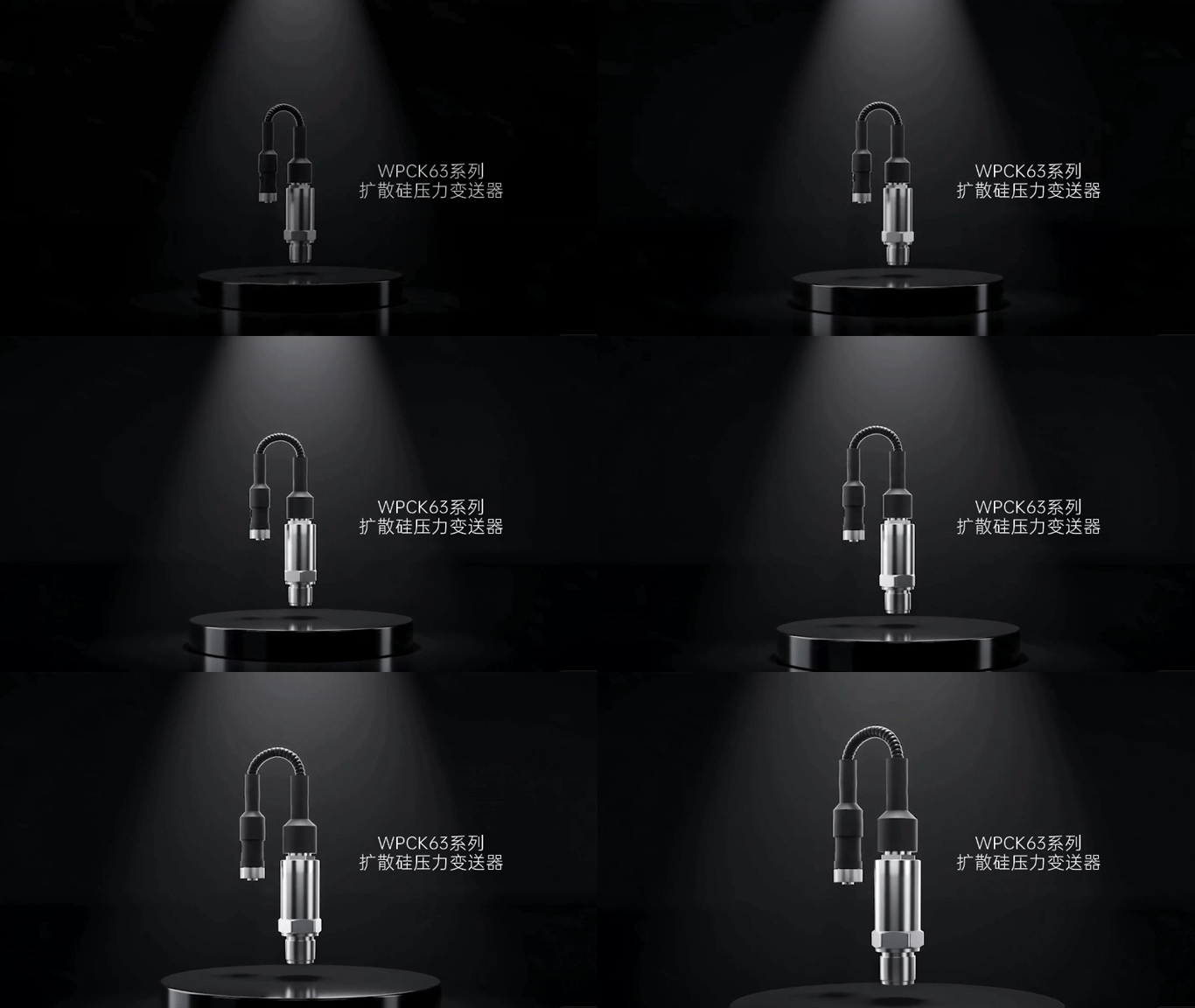
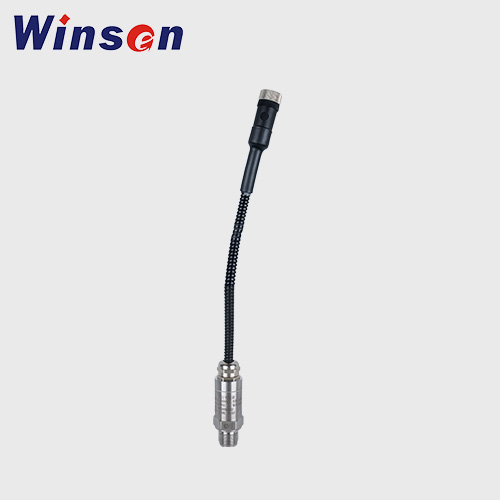
Dòng WPCK63 sử dụng bộ phận cảm biến áp suất silicon khuếch tán, mạch khuếch đại có độ tin cậy cao và bù nhiệt độ rộng để chuyển áp suất đo được thành đầu ra điện tiêu chuẩn.
Thiết kế nhỏ gọn và nhẹ của nó giúp đơn giản hóa việc lắp đặt trong các thiết bị có không gian hạn chế. Cấu trúc thép không gỉ tích hợp giúp cải thiện khả năng chống ăn mòn, đồng thời ống dẫn cáp lượn sóng và đầu nối hàng không hỗ trợ sử dụng trong các môi trường có yêu cầu khắt khe.
Sản phẩm tiêu chuẩn hỗ trợ phạm vi áp suất từ −100 kPa đến 6 MPa, tham chiếu áp suất tuyệt đối và áp kế kín, đầu ra 0,2–2,3 V hoặc I2C, độ chính xác ±0,5% FS và thời gian phản hồi không quá 1 ms.
Thông số kỹ thuật chính của WPCK63
| Tham số | Đặc điểm kỹ thuật |
|---|---|
| Nguyên lý đo lường | Cảm biến áp suất silicon khuếch tán |
| Phạm vi áp suất | −100 kPa đến 6 MPa |
| Tham chiếu áp suất | Máy đo / tuyệt đối / máy đo kín |
| Đầu ra tiêu chuẩn | 00,2–2,3 V / I2C |
| Sự chính xác | ±0,5% FS |
| Trễ | 00,1% FS |
| Độ lặp lại | 00,1% FS |
| Nhiệt độ trôi | ≤±0,03% FS/°C |
| Thời gian đáp ứng | 1 mili giây |
| Áp lực quá tải | 150%, 200% hoặc 300% FS, tùy thuộc vào phạm vi |
| cuộc sống làm việc | ≥1 × 10⁶ chu kỳ áp suất |
| Nhiệt độ làm việc | −30°C đến 85°C |
| Nhiệt độ bảo quản | −40°C đến 125°C |
| Sự ổn định lâu dài | ≤±0,3% FS/năm |
| Sợi áp suất tiêu chuẩn | M20 × 1,5 |
| Vật liệu nhà ở | thép không gỉ 304 |
| Chất liệu màng | thép không gỉ 316L |
| Mức độ bảo vệ | IP68 |
| Kết nối điện | Ống dẫn sóng dạng sóng có đầu nối hàng không M12 |
Phạm vi đo tiêu chuẩn bao gồm 0–10 kPa, 0–20 kPa, 0–35 kPa, 0–70 kPa, 0–100 kPa, 0–160 kPa, 0–250 kPa, 0–500 kPa, 0–1 MPa, 0–1,6 MPa, 0–2,5 MPa, 0–4 MPa và 0–6 MPa, cùng với Tùy chọn áp suất âm −100–0 kPa.
Được xây dựng cho các ứng dụng đòi hỏi áp suất khí
Cấu trúc thép không gỉ tích hợp nhỏ gọn
Thiết bị gas thường có không gian lắp đặt hạn chế, đặc biệt là bên trong tủ điều chỉnh, cụm đồng hồ đo và thiết bị đầu cuối giám sát phân tán.
WPCK63 kết hợp phần tử cảm biến, thiết bị điện tử bù và giao diện áp suất cơ học trong một cấu trúc máy phát nhỏ gọn. Cấu trúc bằng thép không gỉ của nó hỗ trợ khả năng chống ăn mòn và độ bền cơ học mà không cần vỏ bọc bên ngoài lớn.
Vỏ tiêu chuẩn sử dụng thép không gỉ 304, trong khi màng ngăn áp suất sử dụng thép không gỉ 316L. Các vật liệu nhà ở và cấu hình cơ khí thay thế có thể được thảo luận cho các dự án ứng dụng cụ thể.
Phản hồi động nhanh
Áp suất bên trong hệ thống khí có thể thay đổi nhanh chóng khi:
- nhu cầu hạ nguồn tăng hoặc giảm;
- một van mở hoặc đóng;
- bộ điều chỉnh thay đổi vị trí;
- điều kiện vận hành máy nén thay đổi;
- xảy ra tổn thất áp suất bất thường.
Với thời gian phản hồi không quá 1 ms, WPCK63 có thể cung cấp cho bộ điều khiển phản hồi áp suất nhanh, giúp hệ thống phản ứng với những thay đổi áp suất nhất thời và giảm độ trễ điều khiển.
Bù nhiệt độ rộng
Thiết bị dùng gas ngoài trời có thể có sự thay đổi nhiệt độ đáng kể theo mùa và theo ngày.
Phiên bản đầu ra kỹ thuật số được bù từ −10°C đến 70°C, trong khi phiên bản đầu ra analog được bù từ −20°C đến 60°C. Phạm vi nhiệt độ làm việc tổng thể kéo dài từ −30°C đến 85°C.
Việc bù nhiệt độ này giúp giảm ảnh hưởng của môi trường lên đầu ra áp suất và hỗ trợ hoạt động ổn định trong tủ ngoài trời, lắp đặt đường ống và các môi trường thay đổi khác.
Bảo vệ môi trường IP68
Máy phát áp suất khí có thể được lắp đặt ngoài trời, dưới lòng đất hoặc ở những vị trí tiếp xúc với hơi nước ngưng tụ, mưa, bụi và hơi ẩm.
Xếp hạng bảo vệ IP68 giúp bảo vệ các bộ phận cảm biến và điều hòa tín hiệu bên trong khỏi sự xâm nhập của bụi và nước trong các điều kiện lắp đặt được chỉ định.
Điều này làm cho WPCK63 phù hợp với các ứng dụng như:
- tủ điều hòa gas ngoài trời;
- điểm quan trắc ngầm;
- thiết bị đường ống dẫn khí;
- khoang thiết bị dễ bị thấm nước;
- các cơ sở công nghiệp lộ thiên.
Tùy chọn an toàn nội tại cho các khu vực nguy hiểm
Giám sát áp suất khí có thể diễn ra ở những khu vực có thể xảy ra môi trường khí dễ cháy.
Thông tin đặt hàng WPCK63 bao gồm Ex IIC T6 Ga tùy chọn an toàn nội tại. Điều này cho phép đánh giá sản phẩm đối với các ứng dụng trong khu vực nguy hiểm khi được sử dụng theo chứng chỉ hiện hành, các yêu cầu về rào cản an toàn, quy tắc nối dây và thiết kế hệ thống hoàn chỉnh. ([winsen-sensor.com] [2])
Việc lắp đặt cuối cùng trong khu vực dễ cháy nổ phải luôn tuân theo cấu hình sản phẩm đã được phê duyệt và các yêu cầu quy định của địa phương.
Cấu hình linh hoạt cho thiết bị OEM
Các nhà sản xuất thiết bị khí đốt có thể sử dụng các bộ điều khiển, nguồn điện, đầu nối, giao diện áp suất và bố trí cơ khí khác nhau.
WPCK63 có thể được cấu hình theo yêu cầu hệ thống thực tế.
Các tùy chọn tùy chỉnh có sẵn bao gồm:
- phạm vi áp suất;
- thước đo, thước đo tuyệt đối hoặc thước đo kín;
- đầu ra tương tự hoặc kỹ thuật số;
- sợi áp lực;
- chiều dài cáp;
- loại đầu nối;
- vật liệu nhà ở;
- kết cấu lắp đặt;
- tín hiệu đầu ra khác.
Phiên bản I²C sử dụng nguồn điện 3,0–3,6 V, trong khi phiên bản đầu ra 0,2–2,3 V hỗ trợ nguồn điện 3–24 V. Các kết quả đầu ra khác có thể được thảo luận cho các dự án tùy chỉnh.
Tính linh hoạt này cho phép máy phát được tích hợp vào các thiết bị đầu cuối mạng khí đốt, hệ thống điều chỉnh và nền tảng đo lường khác nhau mà không buộc nhà sản xuất phải thiết kế lại kiến trúc thiết bị hoàn chỉnh.
Ứng dụng 1: Giám sát áp suất đường ống dẫn khí
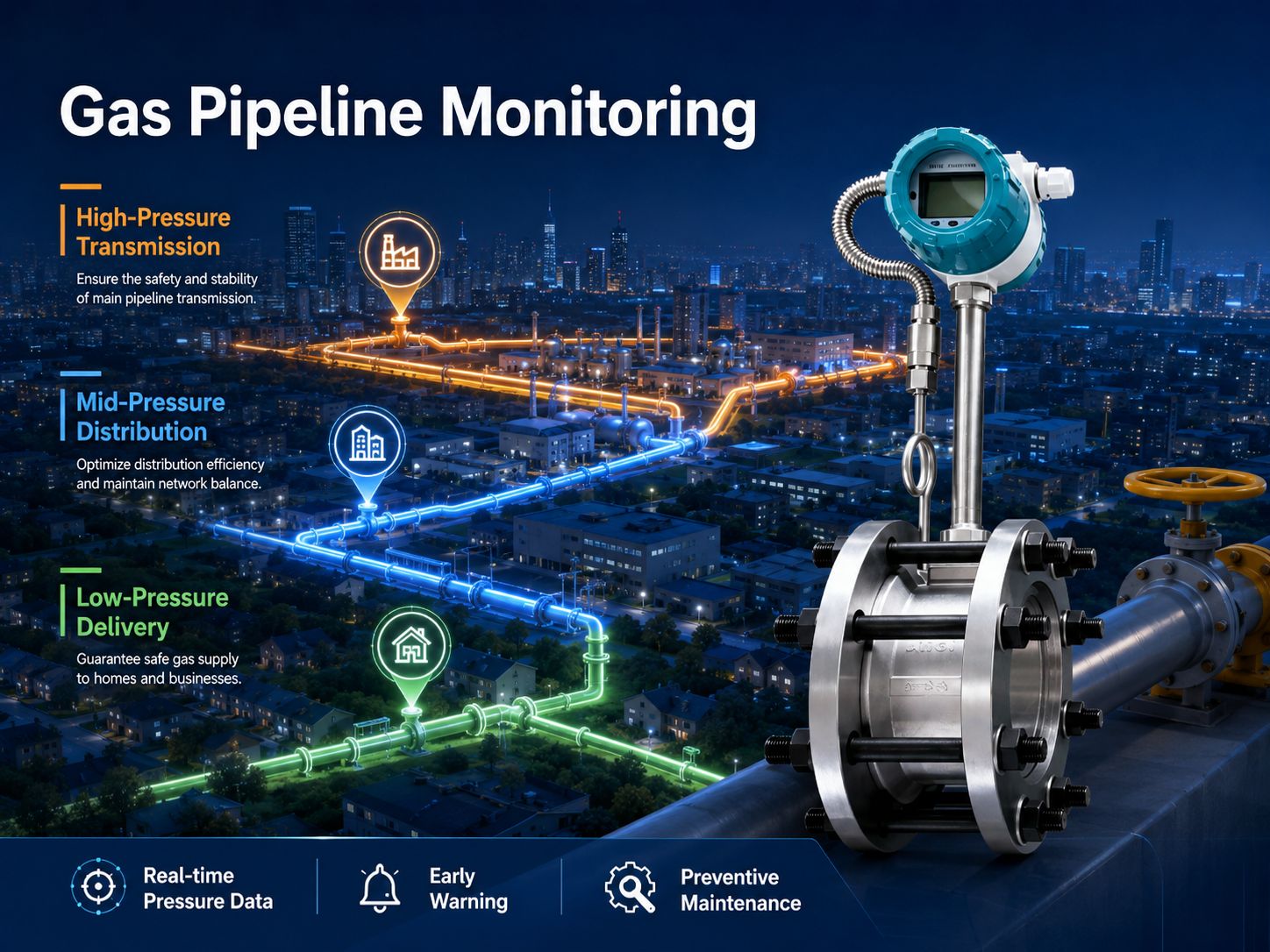
Đường ống dẫn khí tạo thành mạng lưới truyền tải và phân phối đa cấp.
Áp suất thay đổi vì:
- nhu cầu khí đốt;
- ma sát đường ống;
- vận hành van;
- hành vi điều tiết;
- đầu ra máy nén;
- thay đổi nhiệt độ;
- rò rỉ hoặc lỗi thiết bị.
Các máy phát áp suất phân tán được lắp đặt tại các nút mạng quan trọng cho phép người vận hành thấy những thay đổi này một cách liên tục.
Truyền áp suất cao
Các phần có áp suất cao yêu cầu phạm vi đo phù hợp, khả năng chịu quá tải và độ ổn định lâu dài.
Dữ liệu áp suất có thể hỗ trợ:
- giám sát vận hành đường ống chính;
- điều khiển van và máy nén;
- bảo vệ quá áp;
- phân tích xu hướng áp lực;
- điều động từ xa;
- cảnh báo giảm áp suất bất thường.
WPCK63 cung cấp phạm vi có thể lựa chọn lên tới 6 MPa, trong khi khả năng quá tải thay đổi từ 150% đến 300% FS tùy theo phạm vi đã chọn. ([winsen-sensor.com] [2])
Phân phối áp suất trung bình
Đường ống áp suất trung bình kết nối cơ sở hạ tầng khí đốt lớn với các trạm điều tiết khu vực và mạng lưới hạ nguồn.
Dữ liệu áp suất liên tục giúp người vận hành khí:
- duy trì cân bằng áp lực khu vực;
- giám sát các điều kiện cung cấp;
- xác định tổn thất áp suất bất thường;
- tối ưu hóa cài đặt van;
- nâng cao hiệu quả phân phối mạng.
Khi các phép đo áp suất từ nhiều nút được kết nối với nền tảng SCADA hoặc IoT, mạng sẽ trở nên rõ ràng hơn và dễ quản lý hơn.
Giao hàng áp suất thấp
Mạng lưới áp suất thấp yêu cầu một chiến lược đo lường khác.
Tổng áp suất có thể thấp hơn, nhưng những thay đổi áp suất nhỏ hơn có thể ảnh hưởng đến:
- sự ổn định nguồn cung cấp cho người dùng cuối;
- vận hành thiết bị gas;
- hiệu suất đầu đốt thương mại;
- chất lượng đầu ra của bộ điều chỉnh.
WPCK63 cung cấp các tùy chọn phạm vi thấp bắt đầu từ 0–10 kPa, cho phép phạm vi đo phù hợp chặt chẽ hơn với ứng dụng thay vì sử dụng phạm vi rộng không cần thiết.
Để thảo luận rộng hơn về đo áp suất trên mạng lưới khí đốt, hãy xem Cảm biến áp suất cung cấp thông tin chuyên sâu về an toàn trên các mạng lưới truyền tải và phân phối khí.
Ứng dụng 2: Tủ điều hòa gas
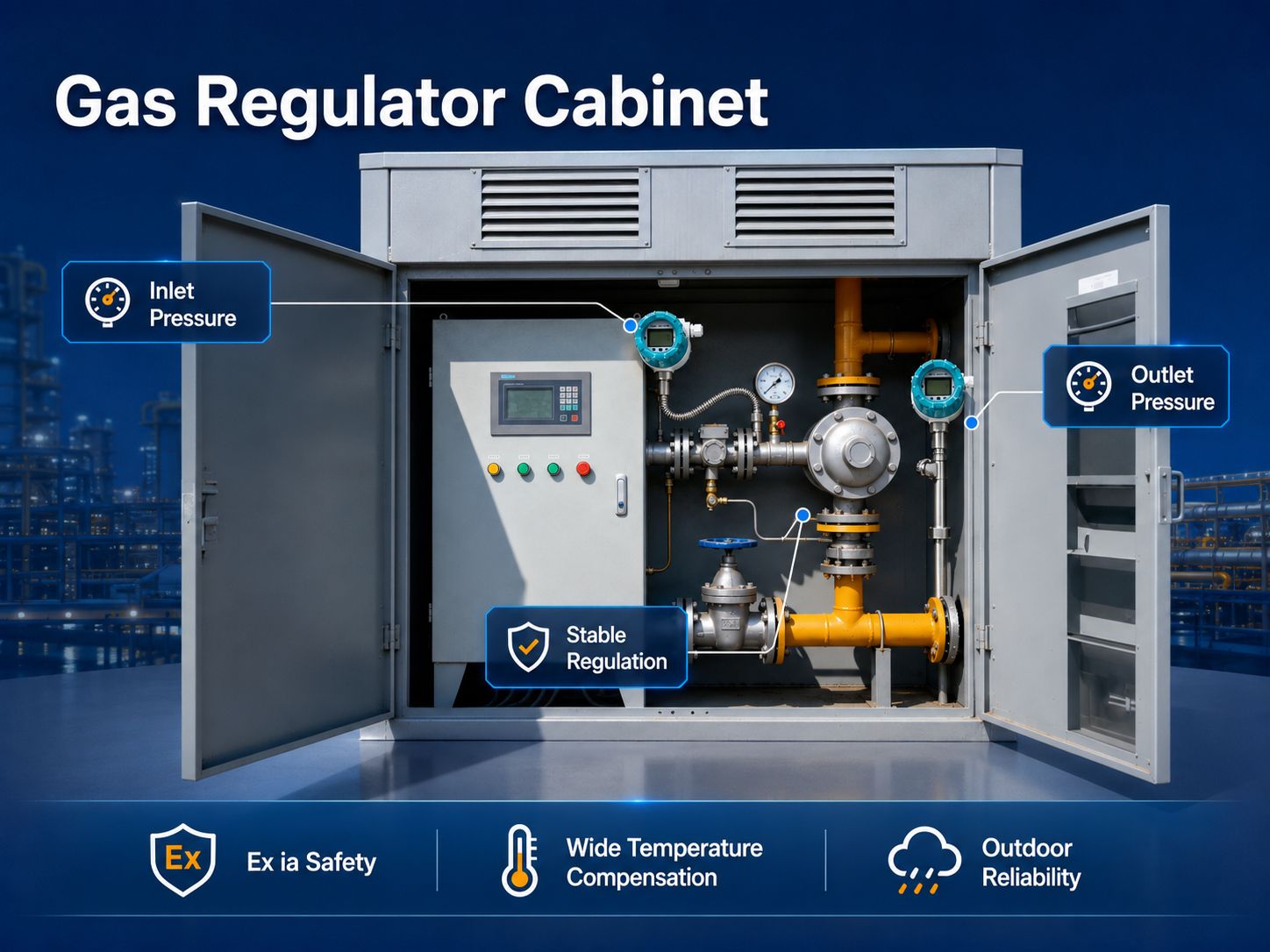
Tủ điều tiết khí kết nối mạng phân phối thượng nguồn với người dùng hạ lưu.
Chức năng cốt lõi của nó là giảm và ổn định áp suất khí. Bất kể áp suất đầu vào hoặc nhu cầu hạ lưu thay đổi như thế nào, áp suất đầu ra phải duy trì trong phạm vi hoạt động được chỉ định.
Một màn hình tủ điều chỉnh điển hình:
- áp suất đầu vào;
- áp suất đầu ra.
Các cấu hình quan trọng hơn về an toàn có thể bao gồm một bộ phát đầu ra bổ sung để dự phòng, xác minh hoặc bảo vệ độc lập.
Giám sát áp suất đầu vào
Bộ truyền đầu vào xác định xem áp suất ngược dòng có còn nằm trong phạm vi hoạt động chấp nhận được của bộ điều chỉnh hay không.
Áp suất đầu vào quá cao có thể gây căng thẳng cho thiết bị điều chỉnh. Áp suất đầu vào không đủ có thể ngăn cản bộ điều chỉnh duy trì nguồn cung cấp ở hạ lưu.
Phản hồi áp suất đầu ra
Áp suất đầu ra là biến điều khiển chính.
Máy phát liên tục gửi áp suất điều chỉnh thực tế đến bộ điều khiển. Tín hiệu có thể được sử dụng để:
- điều chỉnh cơ chế điều tiết;
- duy trì điểm đặt áp suất;
- phát hiện áp suất vượt mức;
- kích hoạt báo động quá áp hoặc thiếu áp;
- kích hoạt logic ngắt an toàn.
Tại sao WPCK63 phù hợp với tủ điều chỉnh
WPCK63 kết hợp một số đặc điểm có giá trị cho thiết bị điều tiết khí ngoài trời:
- phản ứng nhanh;
- phạm vi áp suất thấp và trung bình có thể lựa chọn;
- bù nhiệt độ rộng;
- Bảo vệ IP68;
- tùy chọn an toàn nội tại;
- kết cấu thép không gỉ;
- đầu ra và kết nối có thể tùy chỉnh;
- độ ổn định lâu dài ≤±0,3% FS/năm.
Những tính năng này giúp biến đổi tủ điều chỉnh từ thiết bị giảm áp suất thụ động thành nút điều khiển thông minh có khả năng giám sát từ xa, liên kết cảnh báo và chẩn đoán tình trạng.
Đọc thêm trong Cảm biến áp suất ổn định tủ điều tiết khí như thế nào.
Ứng dụng 3: Bù áp suất của đồng hồ đo lưu lượng khí
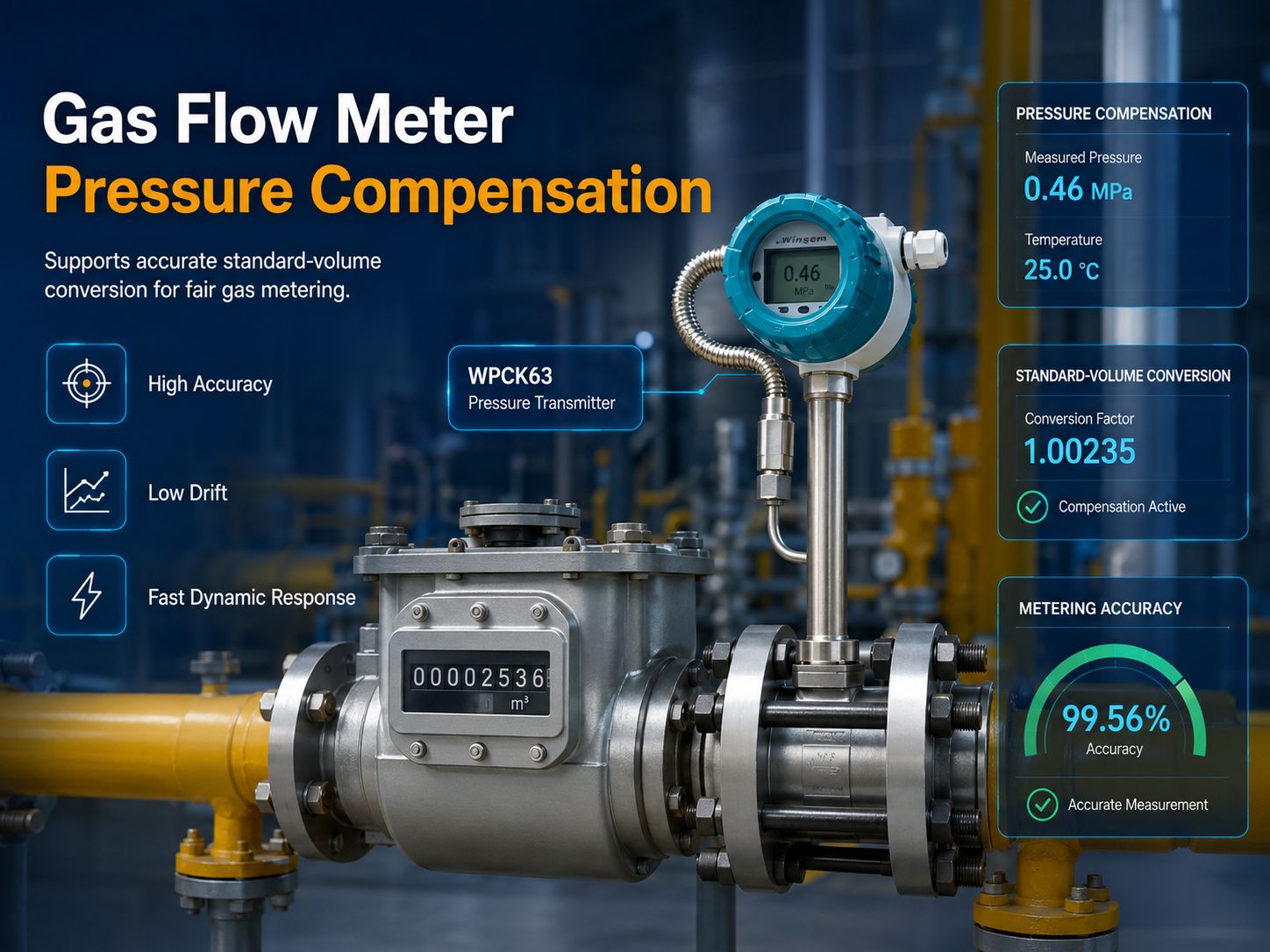
Thể tích khí thay đổi theo áp suất và nhiệt độ.
Đồng hồ đo lưu lượng đo khí trong điều kiện đường ống thực tế. Đối với báo cáo tiêu chuẩn, quản lý năng lượng hoặc thanh toán thương mại, khối lượng vận hành đo được có thể cần phải được chuyển đổi sang điều kiện tham chiếu tiêu chuẩn.
Tính toán này thường yêu cầu ba đầu vào:
- dữ liệu dòng khí;
- nhiệt độ khí;
- áp suất khí.
Do đó, bộ truyền áp suất ảnh hưởng trực tiếp đến độ chính xác của thể tích được bù cuối cùng.
Yêu cầu về cảm biến áp suất để đo khí
Bộ truyền áp suất được sử dụng cùng với đồng hồ đo lưu lượng khí phải cung cấp:
- độ chính xác đo phù hợp;
- độ trễ thấp;
- độ lặp lại tốt;
- độ trôi dài hạn thấp;
- phản ứng năng động nhanh;
- hành vi nhiệt độ ổn định;
- tích hợp điện thuận tiện.
WPCK63 cung cấp độ trễ 0,1% FS, độ lặp lại 0,1% FS và độ ổn định lâu dài không quá ±0,3% FS mỗi năm.
Các tùy chọn đầu ra tương tự và I2C của nó cho phép nó kết nối với các bộ điều khiển lưu lượng kế và hệ thống bù khác nhau.
Cấu hình cuối cùng phải được lựa chọn theo yêu cầu về hiệu suất đo lường, quy trình hiệu chuẩn, phạm vi áp suất và các yêu cầu chứng nhận về đồng hồ đo lưu lượng.
Từ đo áp suất đến quản lý khí thông minh
Máy phát áp suất hiện đại không còn chỉ là một bộ phận đo lường nữa.
Khi được kết nối với bộ điều khiển, mạng truyền thông và nền tảng đám mây, dữ liệu áp suất có thể hỗ trợ:
- trực quan hóa áp lực thời gian thực;
- tạo báo động tự động;
- phân tích xu hướng áp lực;
- cân bằng nguồn cung khu vực;
- chẩn đoán thiết bị từ xa;
- bảo trì phòng ngừa;
- mô hình song sinh kỹ thuật số;
- ghi lại sự kiện lịch sử.
Một kiến trúc khí thông minh điển hình bao gồm:
| Lớp hệ thống | Chức năng |
|---|---|
| Máy phát áp lực WPCK63 | Chuyển đổi áp suất khí thành tín hiệu điện |
| Bộ điều khiển cục bộ | Xử lý dữ liệu và thực hiện logic cảnh báo hoặc điều khiển |
| Mạng lưới thông tin liên lạc | Chuyển dữ liệu áp suất sang nền tảng giám sát |
| Nền tảng SCADA hoặc IoT | Hiển thị trạng thái hiện tại và xu hướng lịch sử |
| Hệ thống quản lý | Hỗ trợ điều phối, bảo trì và ứng phó khẩn cấp |
Bằng cách triển khai các máy phát áp lực tại nhiều điểm, người vận hành khí có thể chuyển từ phản ứng sau sự cố sang xác định các xu hướng bất thường trước khi chúng trở thành vấn đề lớn hơn.
Chọn cấu hình WPCK63 phù hợp
Chọn phạm vi áp suất
Phạm vi phải bao gồm áp suất vận hành bình thường trong khi vẫn duy trì độ phân giải đo hữu ích.
Việc lựa chọn cũng nên xem xét:
- áp lực khởi động;
- áp lực dâng cao;
- điều kiện hư hỏng bộ điều chỉnh;
- áp lực bằng chứng;
- áp suất thử nghiệm hệ thống;
- biên độ an toàn.
Xác nhận tham chiếu áp suất
WPCK63 hỗ trợ:
- đo áp suất;
- áp suất tuyệt đối;
- áp kế kín.
Tham chiếu chính xác phụ thuộc vào tính toán điều khiển và môi trường cài đặt.
Xác nhận tính tương thích của phương tiện
Cơ hoành và tất cả các bộ phận tiếp xúc với môi trường phải tương thích với:
- khí tự nhiên;
- LPG;
- khí hỗn hợp hydro;
- độ ẩm đường ống;
- ngưng tụ;
- chất tạo mùi;
- dầu và các tạp chất khác.
Khả năng tương thích của phương tiện phải được xác nhận trước khi lựa chọn mẫu cuối cùng.
Chọn tín hiệu đầu ra
Đầu ra tiêu chuẩn có sẵn bao gồm:
- 00,2–2,3 V;
- I²C.
Các đầu ra khác có thể được đánh giá theo bộ điều khiển, khoảng cách cáp, nguồn điện và môi trường điện từ.
Đánh giá môi trường cài đặt
Những cân nhắc quan trọng bao gồm:
- phân loại khu vực nguy hiểm;
- Yêu cầu bảo vệ IP;
- nhiệt độ làm việc;
- độ ẩm và ngưng tụ;
- rung động;
- điều kiện ăn mòn;
- bảo vệ cáp và đầu nối.
Câu hỏi thường gặp
WPCK63 được thiết kế để đo lường cái gì?
WPCK63 được thiết kế để đo áp suất khí và chất lỏng và có thể được sử dụng trong các hệ thống khí đốt, cấp nước thông minh, xử lý nước, điều khiển khí nén và thiết bị điều khiển thủy lực.
WPCK63 hỗ trợ phạm vi áp suất nào?
Phạm vi áp suất khả dụng kéo dài từ −100 kPa đến 6 MPa, với nhiều phạm vi tiêu chuẩn trong khoảng từ 0–10 kPa đến 0–6 MPa.
Những tín hiệu đầu ra có sẵn?
Đầu ra tiêu chuẩn là 0,2–2,3 V và I²C. Các tín hiệu khác có thể được tùy chỉnh theo yêu cầu của dự án.
Phản hồi nhanh đến mức nào?
Thời gian phản hồi được chỉ định không quá 1 ms.
Độ chính xác đo tiêu chuẩn là gì?
Độ chính xác tiêu chuẩn được công bố là ± 0,5% FS.
WPCK63 có thể sử dụng ngoài trời được không?
WPCK63 có xếp hạng bảo vệ IP68 và phạm vi nhiệt độ làm việc từ −30°C đến 85°C, hỗ trợ các yêu cầu lắp đặt ngoài trời và lộ thiên khi được lắp đặt đúng cách.
WPCK63 có hỗ trợ các ứng dụng trong khu vực dễ cháy nổ không?
Thông tin đặt hàng bao gồm tùy chọn an toàn nội tại Ex ia IIC T6 Ga. Việc lắp đặt cuối cùng phải phù hợp với cấu hình sản phẩm đã được phê duyệt và các yêu cầu an toàn liên quan.
Sợi áp lực có thể được tùy chỉnh?
Đúng. Ren tiêu chuẩn là M20 × 1.5, trong khi các giao diện áp suất khác có thể được tùy chỉnh.
WPCK63 có thể được tích hợp vào máy đo lưu lượng khí không?
Đúng. Nó có thể cung cấp đầu vào áp suất theo thời gian thực cần thiết để bù nhiệt độ và áp suất. Hệ thống đo lường hoàn chỉnh vẫn phải được hiệu chuẩn và xác nhận theo các yêu cầu đo lường hiện hành.
Kết luận: Dữ liệu áp suất đáng tin cậy cho cơ sở hạ tầng khí đốt an toàn hơn
Từ đường ống truyền tải và mạng lưới phân phối khu vực đến tủ điều tiết và đồng hồ đo lưu lượng khí, phép đo áp suất đáng tin cậy hỗ trợ mọi giai đoạn chính của chuỗi cung ứng khí đốt.
Các Máy phát áp suất silicon khuếch tán WPCK63 kết hợp:
- phạm vi áp suất có thể lựa chọn;
- phản ứng nhanh;
- kết cấu thép không gỉ;
- bù nhiệt độ rộng;
- Bảo vệ IP68;
- cấu hình an toàn nội tại;
- đầu ra tương tự và kỹ thuật số;
- tùy biến OEM linh hoạt.
Bằng cách chuyển đổi những thay đổi áp suất thành dữ liệu chính xác và liên tục, WPCK63 giúp các nhà sản xuất thiết bị khí đốt và nhà điều hành mạng cải thiện quy định, cảnh báo, đo lường, giám sát từ xa và bảo trì phòng ngừa.
Xem thông số kỹ thuật của sản phẩm, tải xuống hướng dẫn sử dụng hoặc yêu cầu hỗ trợ mẫu từ Trang sản phẩm WPCK63.
