
Choose a vented gauge sensor when the machine needs pressure relative to the atmosphere at its current location. Consider sealed gauge when the difference between local atmosphere and the sensor’s sealed reference fits the machine’s allowable error, and eliminating an atmospheric vent helps the installation. The correct gauge vs sealed gauge pressure sensor choice depends on the pressure being controlled, the installation environment and the complete measurement budget. A high nominal range alone does not settle the decision: a hydraulic machine can operate at high pressure while requiring a sensitive low-pressure release check.
Define the reference before comparing the hardware
Vented gauge pressure is the difference between process absolute pressure and local atmospheric pressure. A reference path allows the sensor to follow that atmosphere. Sealed gauge uses an enclosed, atmospheric-like reference rather than a continuously vented reference. Consequently, a sealed gauge reading can differ from local gauge pressure even when both instruments operate correctly. These terms describe the pressure reference, not whether the electrical connector or outer housing looks sealed.
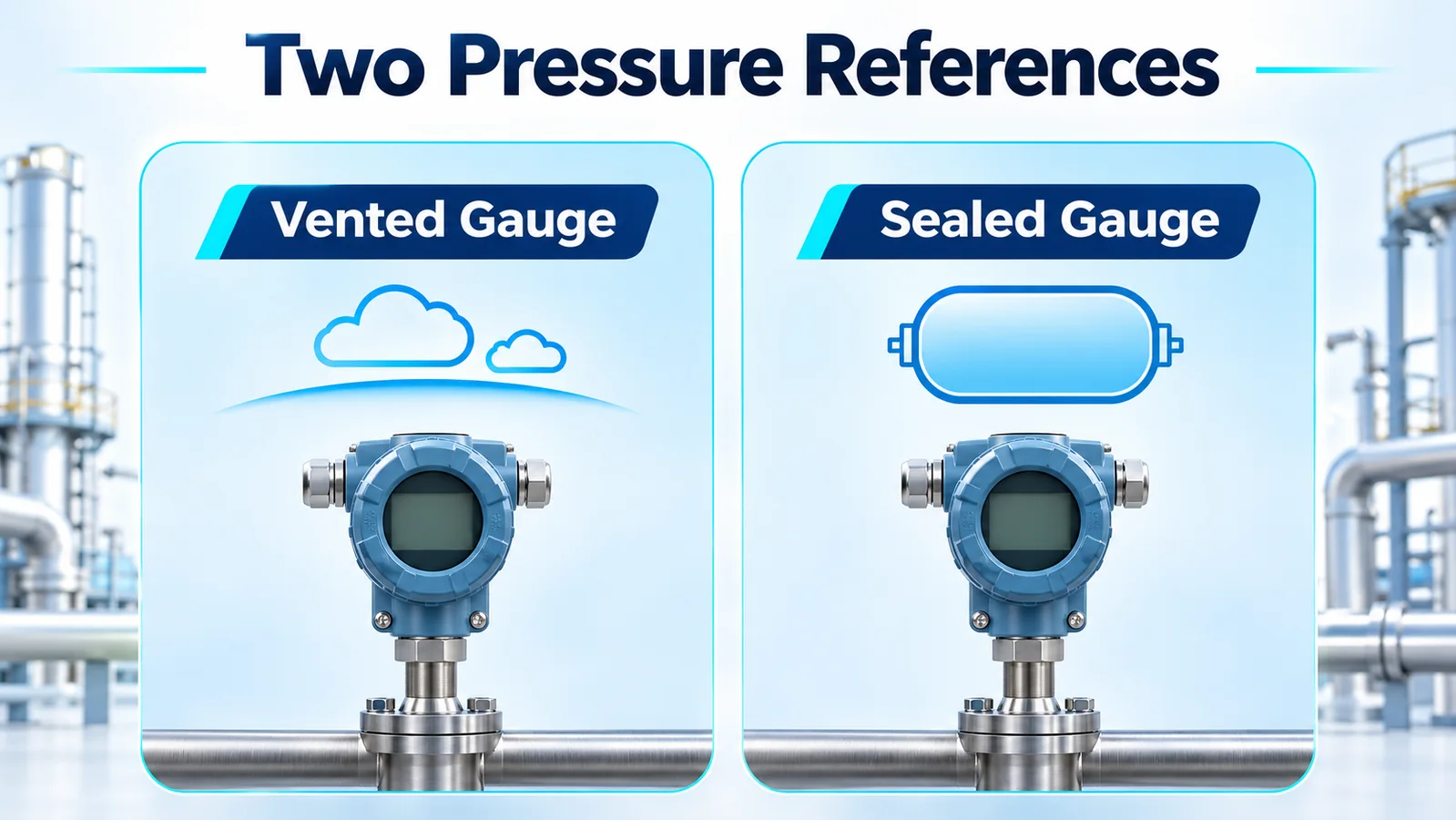
Write the intended quantity into the equipment specification. “Pressure above local ambient at the actuator inlet” calls for a different review from “pressure relative to the supplier’s sealed reference.” Include the reference in the channel name, drawings and purchase description. A bare label such as “0–250 bar” leaves an important requirement undefined.
The existing sealed gauge pressure and PSIS guide explains the terminology. Here the engineering task is to decide how much difference the machine can accept, then prove that the installed arrangement meets that limit. If the real requirement is the difference between two process connections, begin with the hướng dẫn chênh lệch áp suất instead. Neither single-port reference automatically measures a filter’s pressure drop.
Calculate the atmospheric mismatch at the installation
For an idealized comparison at a specified temperature, use:
P_gauge = P_absolute − P_atmosphere
P_sealed = P_absolute − P_reference
Therefore:
P_sealed − P_gauge = P_atmosphere − P_reference
The last term is the reference mismatch. If local atmospheric pressure is lower than the effective sealed reference, the sealed gauge indication is lower than local gauge pressure. This sign matters when setting a minimum-pressure permissive or a release threshold. Obtain the manufacturer’s reference and calibration convention; do not assume that every sealed gauge product has an identical numerical reference.
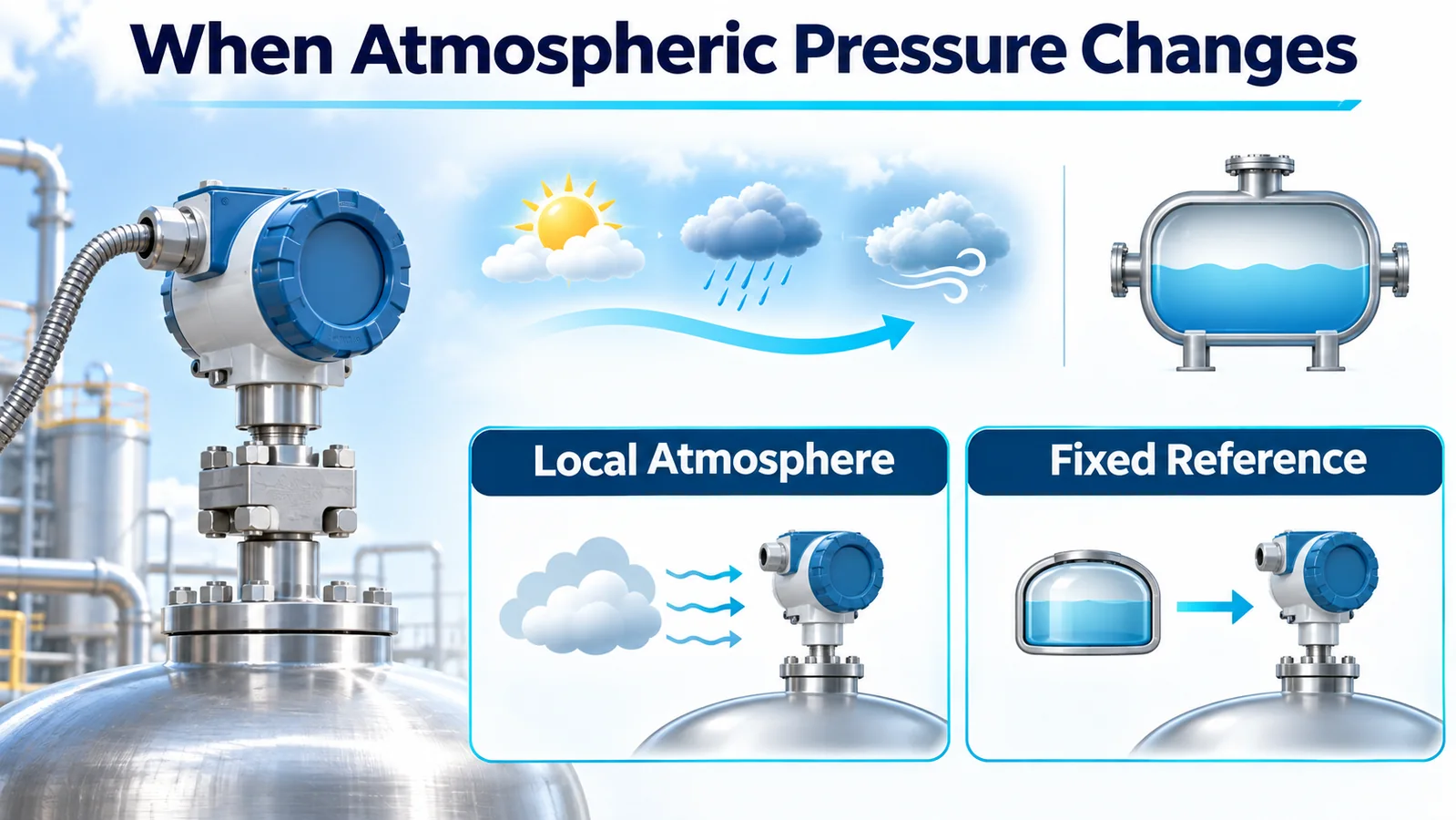
Assess weather and relocation separately. A machine assembled and tested at one location may be delivered to a different elevation. An installation zero adjustment can remove the mismatch at that moment, but subsequent atmospheric changes remain. An operator returning the machine to its original calibration location can encounter a different offset again. A one-time tare is therefore a defined operating procedure, not a conversion of the sensor into a vented gauge instrument.
Collect the expected local atmospheric envelope and the maximum movement between sites. Use actual site requirements or measured pressures rather than treating a weather-service sea-level pressure as the pressure at the machine. For mobile equipment, include the intended route and elevation envelope. Then carry the worst relevant mismatch into the application calculation. Temperature-related reference and sensor behavior should be addressed through the specified thermal performance, not ignored because the reference cavity is sealed.
Put reference error into the machine’s pressure budget
Start with the allowable pressure error in engineering units. Allocate room for the sensor’s stated accuracy, temperature effects, reference mismatch, acquisition electronics and installation influences. Check how the supplier defines each term before adding them: some specifications already combine several effects. For a conservative bounded comparison, sum independent stated limits unless a justified uncertainty model supports another method.
Consider an illustrative hydraulic skid with a 0–250 bar channel. Suppose the application permits a total indication error of ±1.5 bar over the required conditions. Assume the selected sensor’s applicable limit consumes ±0.75 bar, the electronics allowance is ±0.10 bar and other documented installation and thermal effects consume ±0.25 bar. That leaves 0.40 bar for reference mismatch and any remaining effects. These are example allocations, not specifications for a Winsen model.
Now suppose the sealed reference is modeled as 1.00 bar absolute and the lowest local atmosphere is 0.82 bar absolute. The mismatch is −0.18 bar. Its magnitude is 0.072% of the 250 bar span and fits within the example’s 0.40 bar allowance. The conservative sum becomes 0.75 + 0.10 + 0.25 + 0.18 = 1.28 bar. This supports further evaluation of sealed gauge; it does not replace the supplier’s configuration review or the machine acceptance test.
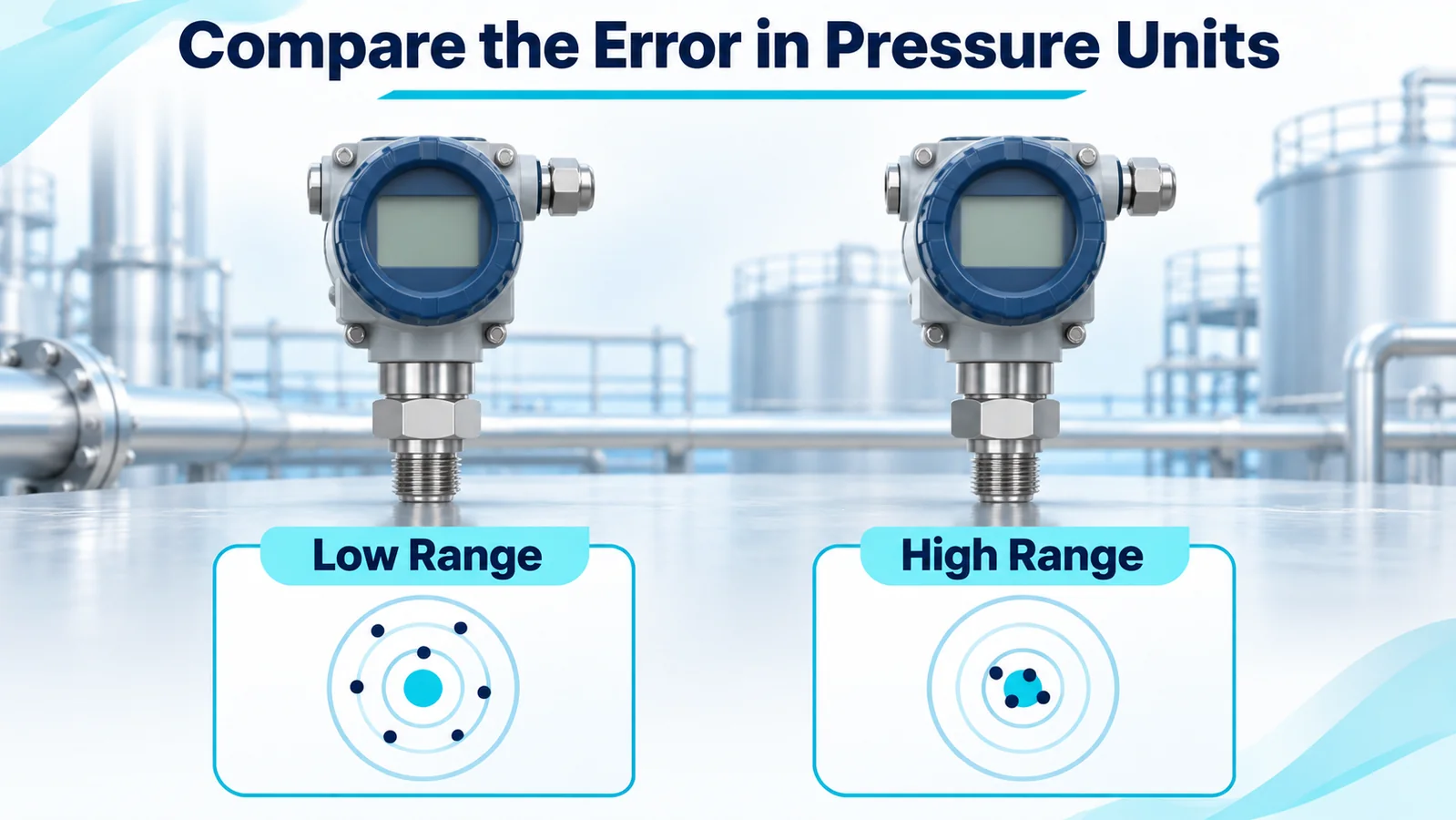
The same mismatch has a different consequence at a low operating point. At 2.00 bar true local gauge pressure, the idealized sealed reading is 1.82 bar. The −0.18 bar difference is 9% of that reading. If the controller must confirm release below 0.10 bar above ambient, the reference mismatch alone is already too large. A sensor acceptable for normal hydraulic operating pressure may therefore be unsuitable for verifying the low-pressure state. Review both tasks explicitly; the release condition may require a separate measurement arrangement.
For a second example, consider a 0–1 bar water-pressure channel with an allowable total error of ±0.01 bar. A 0.03 bar atmospheric change after installation zeroing is 3% of span and three times the complete allowance. Better nominal sensor accuracy cannot recover that lost budget. If the control quantity is local gauge pressure, a correctly implemented vented reference is the natural starting point. This example also shows why a universal crossover rule such as “sealed gauge above a particular pressure” is insufficient.
Review the vent and the complete installed environment
Vented gauge needs a path to the intended ambient pressure. The detailed route may be through the housing, connector or cable, depending on construction. Ask the supplier where it is and how to protect it. Potting a connector, fitting a sealed cable gland or enclosing the instrument can change the pressure seen by the reference if the design relies on that route.
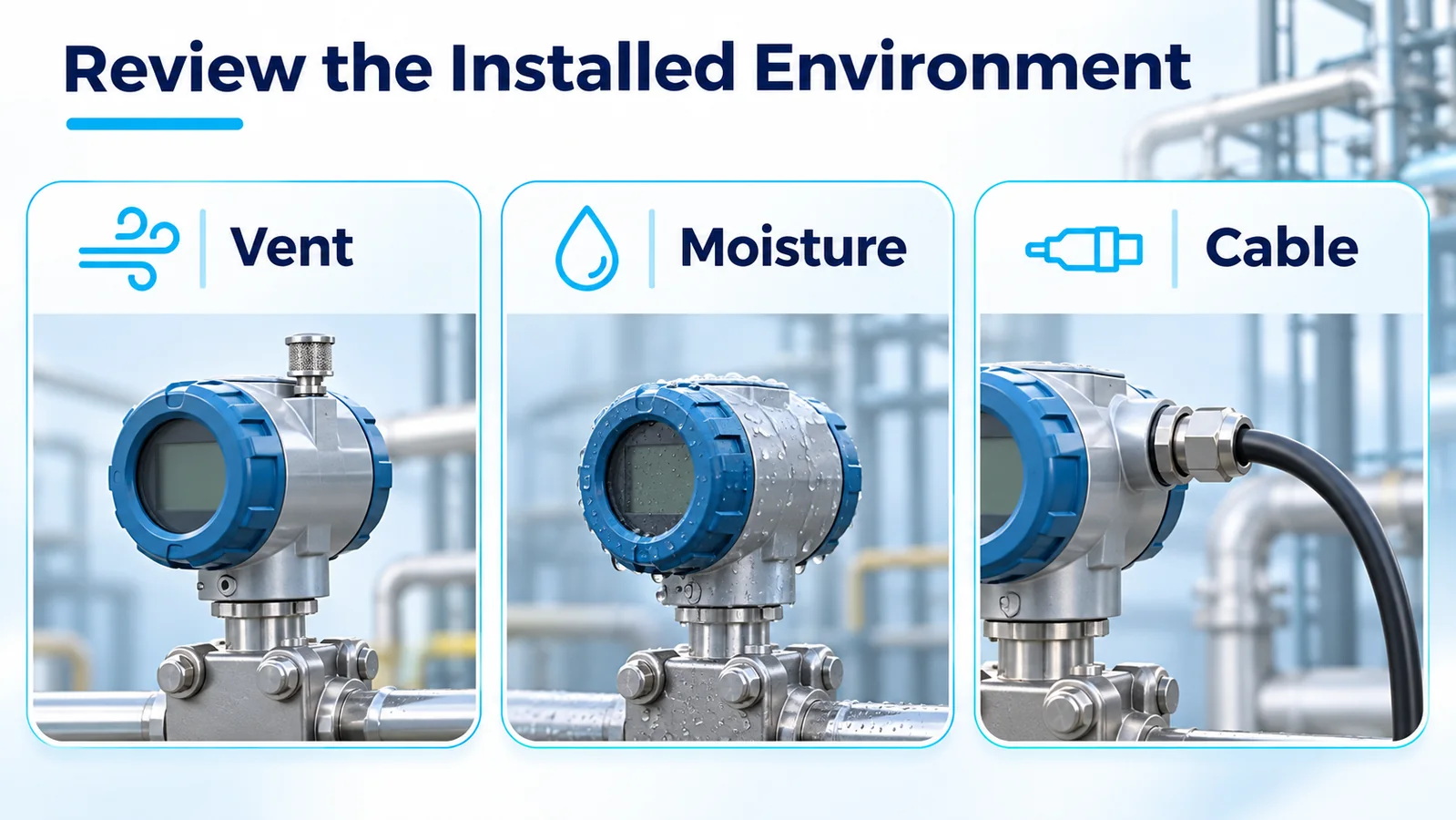
For a washdown skid, inspect spray direction, cleaning chemicals, condensation and cable termination locations. For outdoor machinery, inspect rain, dust, insects, freezing conditions and enclosure pressure changes. A housing ingress rating does not, by itself, explain reference routing or prove suitability for every cleaning procedure. Ask for the installation conditions associated with the rating and the ordered connector assembly.
A vent ending inside a closed cabinet can see cabinet pressure rather than outside atmosphere. Fans, temperature changes or a restricted cabinet breather may then influence the reference. Define which atmosphere belongs in the measurement requirement. If the process requirement is pressure above the room outside the enclosure, demonstrate that the reference follows that room under actual machine conditions.
Sealed gauge removes the need for continuous atmospheric communication at the sensing reference. That can simplify one part of the installation, but the process seal, wetted materials, cable entry and electronics still need their own environmental review. It also leaves the reference mismatch in the pressure budget. Evaluate those two consequences together rather than treating a sealed reference as proof of complete environmental protection.
Use the pressure transducer selection guide to review the remaining mechanical and electrical fit. Reference choice cannot compensate for an incompatible diaphragm material, an unsuitable pressure connection or an output the controller cannot read.
Compare Winsen options at the correct integration level
Winsen’s official pages list gauge, absolute and sealed gauge references for WPCK07, WPCK68 and WPAK63. This identifies families to discuss with engineering; it does not establish that every reference, pressure range, output and connection combination is a standard stocked configuration.
| Family | Verified product role | OEM review question |
|---|---|---|
| WPCK07 | Diffused silicon pressure transmitter | Which ordered reference, output and connection meet the existing control channel? |
| WPCK68 | Compact diffused silicon pressure transmitter with voltage or I²C output options | How will the selected variant fit the enclosure and host electronics? |
| WPAK63 | Isolation-film pressure sensor core with millivolt bridge output | Who will provide excitation, conditioning, packaging and final calibration? |
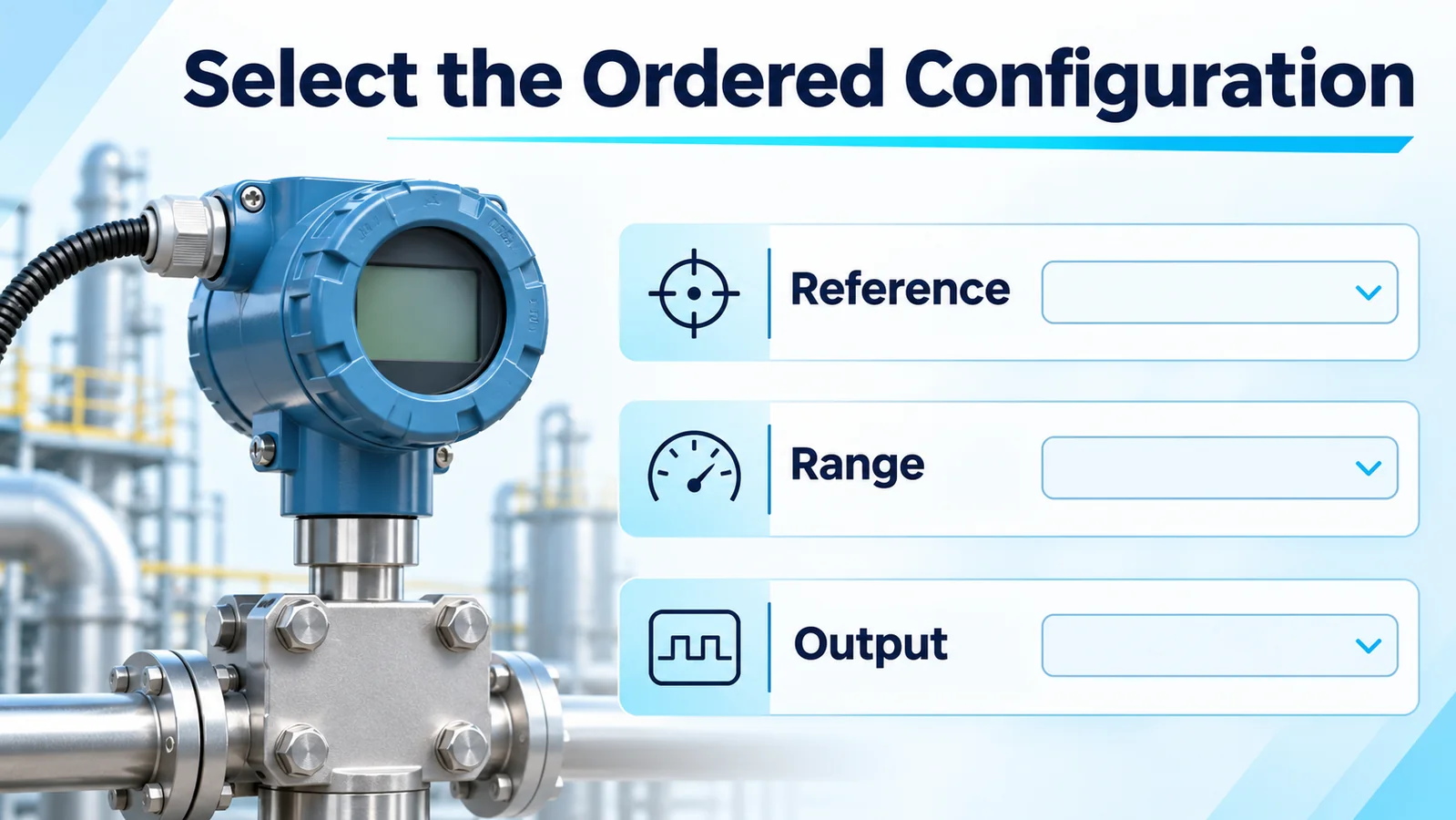
Review the official WPCK07 product pageThì official WPCK68 product page Và official WPAK63 product page with the application specification. Request a drawing and data sheet for the proposed order code. Have the supplier confirm the atmospheric reference path for a vented unit or the reference convention for a sealed gauge unit.
For a core-based design, the OEM also owns how mounting stress, housing temperature and electronics affect the completed channel. A transmitter reduces some integration work, but it still needs verification with the actual wiring, connector, process fitting and software scaling. Current availability, lead time and approved combinations require a quotation or direct supplier confirmation.
Verify the reference behavior in the assembled machine
Create an acceptance plan before ordering samples. Record the ordered reference, pressure span, units, output transfer function, temperature conditions and allowable errors at the machine’s decision points. Identify whether the pressure standard reports gauge or absolute pressure. If the standard and device use different references, record the atmospheric pressure needed for comparison.
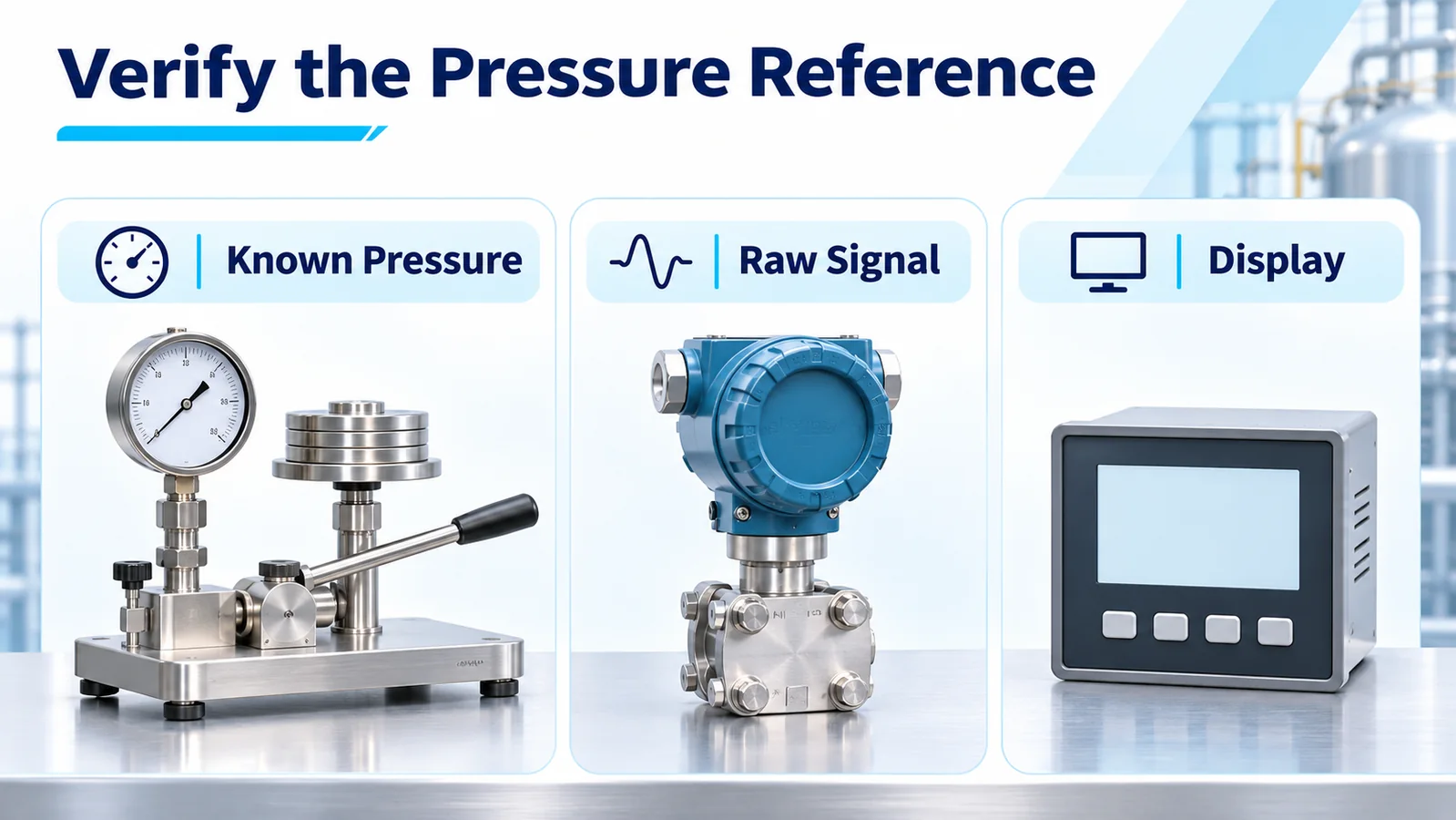
With the process safely isolated and depressurized under the equipment procedure, compare the open-port reading against the expected behavior. A vented gauge instrument should be close to zero within its applicable limits. A sealed gauge instrument can legitimately show an atmospheric mismatch. Do not automatically trim away that indication before recording the conditions and confirming the calibration convention.
Check several increasing and decreasing pressure points, including the lowest decision point and the normal operating region. Test the final enclosure and cable arrangement. For a vented installation, assess whether closing the cabinet, running its fan or applying the specified environmental exposure changes the reading. For sealed gauge, evaluate the expected atmospheric mismatch and how the controller treats it. Include temperature testing when thermal effects are material.
Finally, exercise the actual controller thresholds with the accepted measurement errors. Verify scaling, displayed units, alarming and recovery behavior. Keep the results with the machine configuration so a replacement sensor is ordered and commissioned using the same reference. A calibration report for a loose instrument is useful evidence, but it does not describe every installation influence introduced by the assembled machine.
Câu hỏi thường gặp
Does sealed gauge always read zero when exposed to air?
No. Its reference does not continuously track local atmosphere. The open-port reading depends on the difference between local atmosphere and the effective reference, together with the instrument’s applicable errors and calibration convention.
Can software make sealed gauge behave like vented gauge?
Software can correct for atmospheric mismatch when it has a suitable local atmospheric measurement and a known reference relationship. That creates a combined measurement system with additional error, synchronization and fault-handling requirements. A fixed subtraction or one-time zero does not track later weather changes.
Is sealed gauge automatically better for high-pressure equipment?
It is a candidate when the atmospheric mismatch is small relative to the required accuracy and a vent is undesirable. Still check the lowest operating point, release confirmation and any differential calculation. Those decisions can require a tighter allowance than the normal high-pressure reading.
What should an OEM send Winsen for selection review?
Send the required pressure reference, normal and transient pressure, lowest critical decision point, allowable error, site atmospheric envelope, process and ambient temperatures, media, connection and electrical interface. Include a drawing of the enclosure and vent arrangement where relevant. Ask Winsen to confirm the exact configuration and its applicable calibration and environmental requirements before finalizing the equipment design.
