

MEMS (Micro-Electro-Mechanical Systems) pressure sensors are miniaturized devices that combine mechanical and electrical components on a single silicon chip. These sensors have transformed the field of pressure measurement by offering small size, low power consumption, cost efficiency, ಮತ್ತು high sensitivity. They are widely used in automotive systems, medical devices, consumer electronics, and industrial applications.
This article explores the working principles, design architecture, manufacturing process, types, applications, ಮತ್ತು future trends of MEMS pressure sensors, making it a comprehensive reference for engineers, students, and product developers.
1. What Are MEMS Pressure Sensors?
1.1 Definition
MEMS pressure sensors are devices that detect pressure changes and convert them into an electrical signal using microscale mechanical elements fabricated through semiconductor manufacturing technologies.
MEMS Pressure Sensor = Mechanical Sensing Structure (e.g., diaphragm) + Electrical Transduction Circuitry + Silicon Substrate
1.2 Key Features
- Micro-scale size
- Low-cost batch production
- High sensitivity and precision
- Compatibility with digital systems
- Durable and robust for harsh environments
2. Working Principle of MEMS Pressure Sensors
2.1 Pressure Sensing Element
At the core of a MEMS pressure sensor is a thin diaphragm that deforms under pressure.
2.2 Transduction Mechanisms
The mechanical deformation is translated into an electrical signal using:
- Piezoresistive effect: Change in resistance due to strain
- Capacitive effect: Change in capacitance due to diaphragm displacement
- Resonant frequency shift: Change in vibration frequency
- Optical displacement: Interference or reflection modulation
3. Architecture of MEMS Pressure Sensors
3.1 Basic Structure
- Diaphragm: Thin silicon or polymer membrane
- Sensing Element: Piezoresistor or capacitor
- Cavity: Formed using etching techniques
- ತಲಾಧಾರ: Silicon wafer
- ಸಿಗ್ನಲ್ ಕಂಡೀಷನಿಂಗ್ ಸರ್ಕ್ಯೂಟ್: Amplifies, filters, and digitizes the signal
3.2 Packaging
MEMS sensors often require hermetic sealing ಮತ್ತು media isolation to protect from environmental damage and to ensure long-term stability.
4. Types of MEMS Pressure Sensors
| ಟೈಪ್ ಮಾಡಿ | ವಿವರಣೆ | Common Applications |
|---|---|---|
| Piezoresistive MEMS | Strain causes resistance changes in diffused resistors | Automotive, industrial, biomedical |
| Capacitive MEMS | Pressure alters capacitance between plates | Medical, HVAC, low-pressure systems |
| Resonant MEMS | Pressure changes vibration frequency of resonator | Aerospace, high-precision instrumentation |
| Optical MEMS | Uses light path change or interference patterns | Hazardous or explosive environments |
5. Types of Pressure Measurements
MEMS pressure sensors can be classified based on what kind of pressure they measure:
5.1 ಸಂಪೂರ್ಣ ಒತ್ತಡ
Measured against a vacuum reference.
5.2 ಗೇಜ್ ಒತ್ತಡ
Measured relative to ambient atmospheric pressure.
5.3 ಭೇದಾತ್ಮಕ ಒತ್ತಡ
Measures the pressure difference between two points.
5.4 Sealed Pressure
Measured against a sealed reference (usually 1 atm).
6. Manufacturing Process of MEMS Pressure Sensors
The fabrication of MEMS pressure sensors involves advanced micromachining techniques.
6.1 Common Steps
- Wafer Preparation: Start with a silicon wafer.
- Oxidation: Grow oxide layers for insulation or masking.
- Photolithography: Define patterns on the wafer using photoresist and UV light.
- Etching:
- Wet etching: KOH, HF solutions
- Dry etching: Plasma or reactive ion etching (RIE)
- Doping or Diffusion: Create piezoresistive regions.
- Bonding:
- Anodic bonding (silicon-glass)
- Fusion bonding (silicon-silicon)
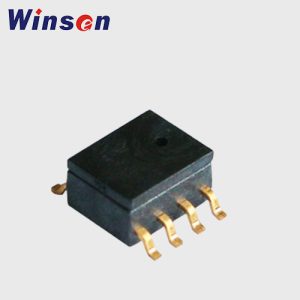
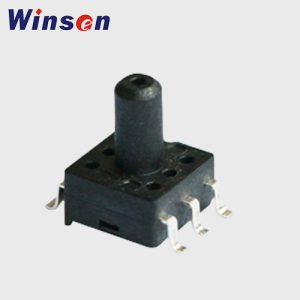
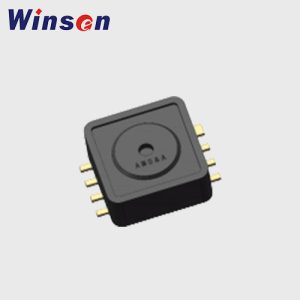
- Packaging: Attach sensor die to lead frames or PCBs; seal cavity.
7. Performance Parameters
| ನಿಯತಾಂಕ | ವಿವರಣೆ |
|---|---|
| ಸೂಕ್ಷ್ಮತೆ | Change in output per unit of pressure |
| ನಿಖರತೆ | Deviation from true pressure value |
| ರೇಖಾತ್ವ | Deviation from ideal straight-line output |
| ಅನಾಸಕ್ತಿ | Difference in output for increasing/decreasing pressure |
| Drift | Long-term stability over time and temperature |
| ಪ್ರತಿಕ್ರಿಯೆ ಸಮಯ | Time taken to register pressure change |
| Overpressure | Maximum pressure before permanent damage |
8. Advantages of MEMS Pressure Sensors
- ✅ ಚಿಕಣಿ ಪ್ರದೇಶೀಕರಣ: Ideal for space-constrained applications
- ✅ Batch Fabrication: Enables mass production at low cost
- ✅ Low Power Consumption: Suitable for battery-operated devices
- ✅ Digital Interface: Easily integrated into embedded systems
- ✅ ಹೆಚ್ಚಿನ ಸಂವೇದನೆ: Capable of detecting minute pressure changes
- ✅ Environmental Robustness: Suitable for harsh industrial use
9. Applications of MEMS Pressure Sensors
9.1 Automotive
- ಟೈರ್ ಪ್ರೆಶರ್ ಮಾನಿಟರಿಂಗ್ ಸಿಸ್ಟಮ್ಸ್ (TPMS)
- Intake manifold pressure
- Fuel rail and oil pressure
- Airbag deployment systems
9.2 ವೈದ್ಯಕೀಯ ಸಾಧನಗಳು
- Blood pressure monitors
- Respiratory sensors in ventilators
- Infusion pumps
- Catheter tip pressure sensors
9.3 Consumer Electronics
- Barometric pressure sensors in smartphones
- Wearables for fitness tracking
- Altimeters in smartwatches
9.4 Industrial and HVAC
- Pneumatic system pressure control
- Cleanroom monitoring
- HVAC duct pressure regulation
9.5 Aerospace
- Cabin and external pressure monitoring
- Flight instrumentation
10. Key Manufacturers of MEMS Pressure Sensors
| Company | Notable Products |
|---|---|
| Bosch Sensortec | BMP280, BMP388 (barometric sensors) |
| Honeywell | TruStability™ HSC/SSC series |
| STMicroelectronics | LPS22HH, LPS33HW |
| TE Connectivity | MS5803, MS8607 |
| NXP Semiconductors | MPX series |
| Infineon | DPS310, XENSIV™ series |
| ವಿನ್ಸೆನ್ | WPAK63, WPCK07, WPAS01 |
11. Integration with IoT and Smart Systems
MEMS pressure sensors play a key role in ಇಂಟರ್ನೆಟ್ ಆಫ್ ಥಿಂಗ್ಸ್ (IoT) applications, where they contribute to ನೈಜ-ಸಮಯದ ಮೇಲ್ವಿಚಾರಣೆ, predictive maintenance, ಮತ್ತು energy-efficient automation.
11.1 Features for IoT
- Ultra-low power modes
- I²C and SPI digital interfaces
- Embedded temperature compensation
- Wireless connectivity with BLE or LoRa modules
12. Challenges and Limitations
| Challenge | ವಿವರಣೆ |
|---|---|
| ಉಭಂಗಕೂಟ | Output can vary with environmental temperature changes |
| ಮಾಧ್ಯಮ ಹೊಂದಾಣಿಕೆ | Liquids and gases may corrode sensing elements |
| Packaging Complexity | Maintaining hermetic seal in small form factor |
| Noise and Cross-Sensitivity | Interference from mechanical shock or EM fields |
13. Future Trends in MEMS Pressure Sensors
13.1 Monolithic Integration
Combining pressure sensors with temperature, humidity, and gas sensors on one die.
13.2 AI-Based Calibration
Using machine learning for auto-calibration ಮತ್ತು real-time error correction.
13.3 Flexible and Wearable MEMS
Emerging materials like graphene and flexible polymers for use in wearables and healthcare patches.
13.4 Higher Pressure Ranges
Development of MEMS sensors suitable for hydraulic and deep-sea environments.
14. FAQs About MEMS Pressure Sensors
Q1: How accurate are MEMS pressure sensors?
They can achieve accuracy of ±0.25% to ±2% Full Scale, depending on the model and calibration.
Q2: Can MEMS pressure sensors measure vacuum?
Yes, absolute MEMS pressure sensors can measure down to vacuum levels (~0 Pa).
Q3: Are MEMS sensors suitable for liquid media?
Some are designed with media isolation for use with liquids, but standard models are for dry gas.
Q4: What is the typical size of a MEMS pressure sensor?
Dimensions range from 2 × 2 mm to 6 × 6 mm, depending on the package.
15. Summary Table: MEMS Pressure Sensors at a Glance
| ವೈಶಿಷ್ಟ್ಯ | ವಿವರಣೆ |
|---|---|
| Size | Micro-scale (millimeter range) |
| Principle | Piezoresistive, capacitive, resonant, optical |
| Output Type | Analog or Digital (I²C, SPI) |
| ಒತ್ತಡದ ವ್ಯಾಪ್ತಿ | Vacuum to several hundred bar |
| ನಿಖರತೆ | ±0.25%–2% FS typical |
| Operating Temp | –40°C to +125°C (some models up to 150°C) |
| Typical Applications | Automotive, medical, IoT, industrial, aerospace |
ತೀರ್ಮಾನ
MEMS pressure sensors exemplify the convergence of microscale engineering, electronics, and material science, providing accurate, reliable, and low-cost pressure measurements across a wide range of industries. With ongoing advances in miniaturization, digital integration, and wireless communication, these sensors will play a vital role in shaping the future of smart systems, wearable tech, and intelligent automation.
